
Review · JAPAN
Hiroshima; Hiroshima Peace Memorial Museum and Castle Tour
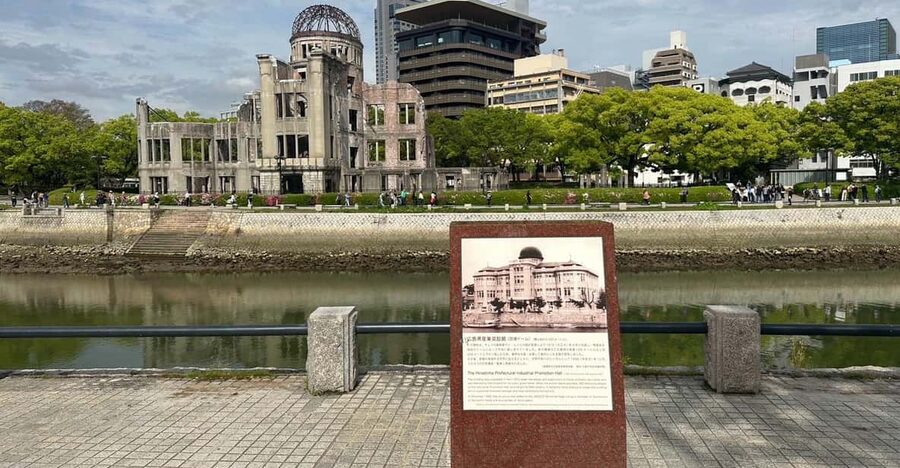
Hiroshima’s past is not tucked behind glass here. It unfolds at the Peace Memorial Museum, beneath the open sky of Peace Memorial Park, and beside the Atomic Bomb Dome, where the scale of August 6, 1945 becomes painfully real. A guide helps connect the exhibits to the streets, buildings, and people around you.
I like the way this tour pairs the difficult peace sites with Hiroshima Castle, giving you a wider view of the city beyond the bombing. I also like the personal attention: guides such as Maria, Leo, Ihsan, and Mehak have adjusted the pace, answered family questions, and pointed out less visited sites such as a surviving bank, school, or hospital. The main drawback is that three hours is tight, and the castle can feel less essential after the emotionally demanding museum.
Key points to know before booking
- The museum is the emotional center: Expect graphic and upsetting exhibits about the atomic bombing and its aftermath.
- The guide adds meaning outdoors: The Peace Park monuments, hypocenter, and Atomic Bomb Dome make more sense with context.
- You may see surviving everyday buildings: Some guides include a bank, school, hospital, or other bomb-damaged sites.
- The castle changes the subject: Samurai armor, swords, helmets, and shrine architecture offer a cultural counterpoint.
- The pace can be tailored: Guides are often willing to slow down for reading, families, questions, and photographs.
- The price is $67 per person: That includes the walking tour, museum admission, guide, and a traditional Hiroshima snack, but not castle admission or meals.
Why this Hiroshima tour works
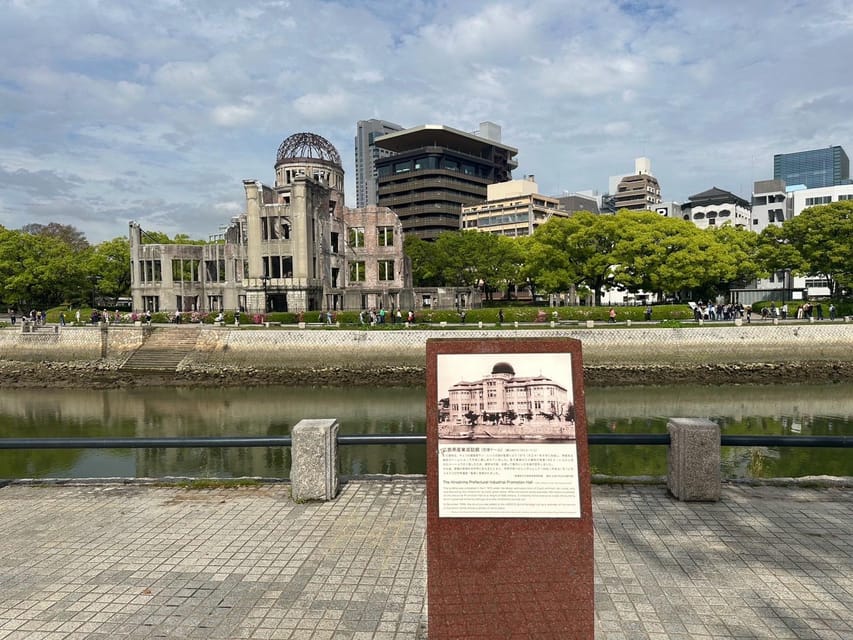
I see this as a useful first visit to Hiroshima because it does not treat the Peace Memorial Museum as a stand-alone attraction. You begin near the museum, move through the park, see the Atomic Bomb Dome and hypocenter, then continue to Hiroshima Castle and Gokoku Shrine.
That sequence gives you three connected views of the city. First comes the human cost of war. Then comes the physical evidence left in the city. Finally, you see older military and cultural traditions that existed before the bombing and remain part of Hiroshima today.
The strongest part is the guide. The experience is offered in English, Hindi, Malay, and Urdu, and the guides named in the feedback include Maria, Leo, Ihsan, Mehak, Bilal, Ali, and others. Their styles vary, but the repeated strength is clear: they explain difficult material in plain language and adjust the visit to the people in front of them.
Maria, in particular, has been praised for patience when visitors needed extra time to read exhibits. Leo has adapted tours to personal interests, while Ihsan has been singled out for keeping people engaged through the full three hours. Mehak has been described as warm and energetic, and Bilal as careful and respectful with the subject matter.
That personal element matters in Hiroshima. You can walk through the park alone, but it is easy to miss the meaning behind a monument, pass the hypocenter without realizing what happened there, or leave the museum with a pile of facts but little sense of how the city recovered.
More Castle Museums in Japan:
- Osaka Castle: Museum and Tower Entry Ticket
★ 4.5 · 2,380 reviews - Osaka: Osaka Castle & Historical Museum Guided Tour
★ 4.8 · 28 reviews - (Ticket Included) Explore Osaka Castle & Museum of History
★ 4.8 · 21 reviews
Inside the Peace Memorial Museum
The museum visit takes about an hour and includes admission. You can also purchase an optional audio guide, though that cost is not included.
Expect a serious, quiet visit. The exhibits depict the horror of the atomic bomb, including the effects on individuals, families, buildings, and daily life. The information is not presented as a quick war-history lesson. It asks you to consider what happened to ordinary people and what the bombing meant for the city.
This is the point where the tour can become physically and emotionally tiring. I recommend wearing comfortable shoes, but emotional preparation matters just as much. If you are traveling with children or anyone sensitive to graphic material, ask the guide beforehand about the nature of the exhibits.
A guide can help you decide how much time to spend reading and when to move on. Several visitors have valued being allowed to explore parts of the museum on their own while receiving explanations elsewhere. That is a good balance: you get expert context without having someone talk continuously through every display.
The museum ticket is included in the $67 price, and the tour provides a way to skip the ticket line. That saves a little time, though the larger value is having someone explain the difficult material in relation to the outdoor sites.
Walking through Peace Memorial Park
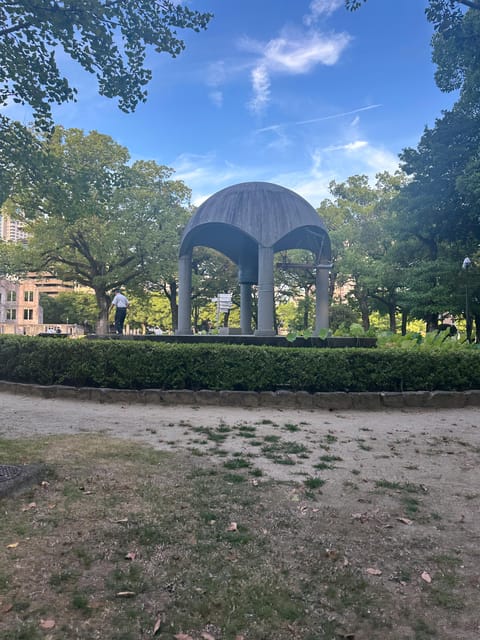
After the museum, you spend about an hour in Peace Memorial Park with the guide. This is not simply a stroll between photo stops. The park contains memorials and monuments with specific meanings, and the guide explains the ideas behind them.
You will discuss World War II, the bombing, remembrance, and the city’s message of peace. The outdoor setting gives you room to process what you have just seen inside. It also helps show how Hiroshima has chosen to remember the event while continuing as a living city.
This portion suits people who prefer context to a fast checklist of sights. Guides have been praised for answering questions, sharing stories, and adjusting the pace when a group wants to read more carefully or pause for photographs.
The park is also where the walking nature of the tour becomes clear. You are moving between the museum, memorials, the Atomic Bomb Dome, and later the castle. Comfortable shoes are important, and you should allow for the fact that three hours can feel full, especially in hot weather or when the group takes its time.
The Atomic Bomb Dome and the hypocenter
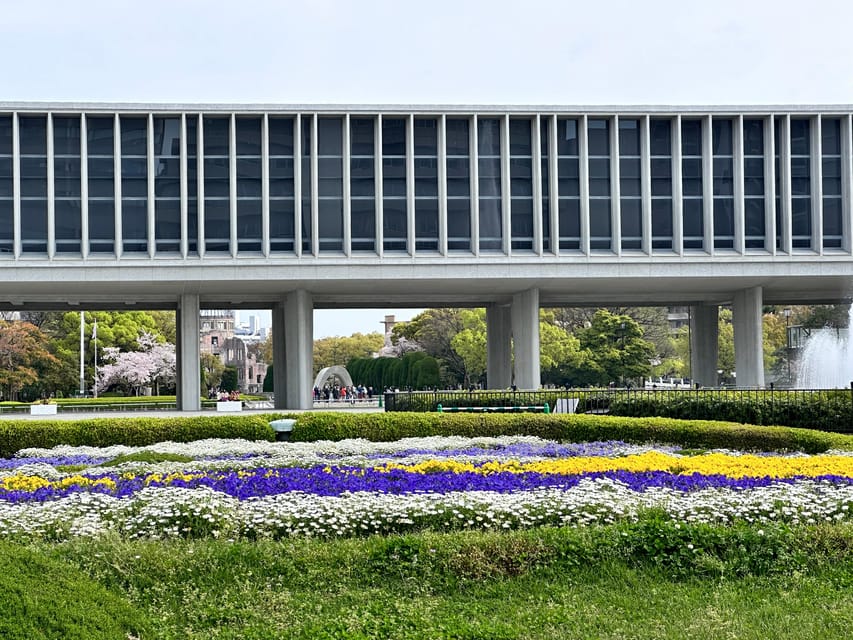
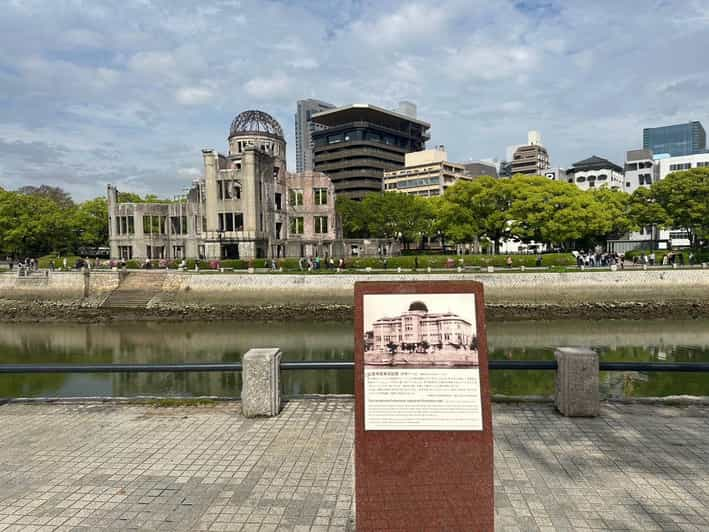
The Atomic Bomb Dome receives about ten minutes on the formal schedule, but the stop carries unusual weight. The building’s damaged frame is one of Hiroshima’s most recognizable reminders of the blast, and seeing it in person gives the museum’s displays a physical setting.
The tour also explores the hypocenter, the point connected to the explosion. This is an important part of the experience because it shifts the story from a distant historical event to a precise place in the city.
Do not expect a long indoor visit here. The value comes from the guide’s explanation and from seeing the surrounding streets. The Dome is a photo stop, but reducing it to a photograph misses the reason it has been preserved.
Some guides also take groups to less familiar bomb-damaged buildings. Past visitors have described seeing a bank where only one employee survived, along with a school, hospital, and other sites connected to everyday life at the time. These stops are not guaranteed in the same form, so ask your guide what can fit into your three-hour visit.
I especially like this focus on ordinary buildings. A famous memorial can tell you what a city wants remembered. A bank or school can help you picture the people who worked, studied, and lived there before the blast.
More Castle Tours in Japan:
- Tokyo Castle & Imperial PalaceーShogun Walking Tour
★ 4.7 · 1,068 reviews - Kyoto: Nijo-jo Castle and Ninomaru Palace Guided Tour
★ 4.7 · 1,020 reviews - Ultimate Osaka Walking Tour: Castle, Dotonbori & Hidden Gems
★ 5.0 · 862 reviews - Tokyo Castle & Imperial PalaceーShogun Walking Tour
★ 5.0 · 724 reviews
Hiroshima Castle and Gokoku Shrine
The final major stop is Hiroshima Castle, with about 40 minutes for sightseeing and a guided visit. You can see samurai-related displays, including swords and helmets, and learn about an older side of Hiroshima’s culture.
Gokoku Shrine is also part of the planned route. Together, the shrine and castle provide a change in mood after the Peace Park. You are no longer focused only on 1945. Instead, you are looking at the city’s prewar identity, military traditions, and cultural life.
This is also the section where expectations need managing. One visitor felt the castle added little compared with the memorial sites. I can understand that reaction, particularly if your main reason for coming to Hiroshima is the peace history. The castle is useful for broadening the tour, but it is not the strongest reason to book it.
If you enjoy samurai history, traditional architecture, swords, and helmets, you will probably appreciate the contrast. If the museum takes longer than planned, the castle may receive a shorter visit. Castle admission is not included, so check the current cost when booking.
The guide’s role and tour style
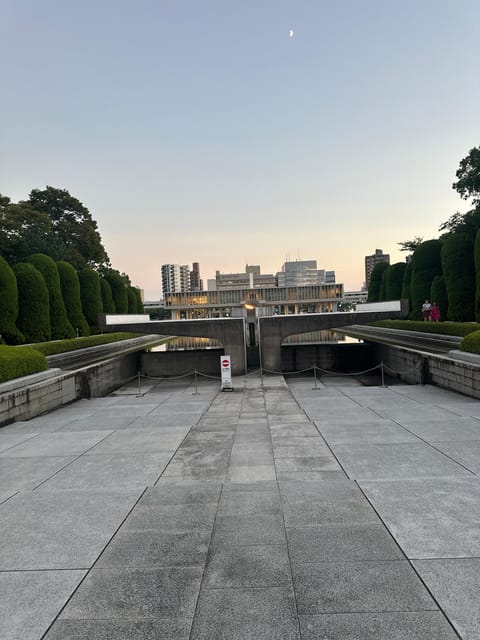
The guide is the main reason to choose this experience instead of visiting the sites alone. Hiroshima’s memorial district is easy to reach, but the connections between locations are not always obvious.
A good guide can explain why a monument matters, identify the hypocenter, describe how the city changed, and answer questions about Japanese culture. The strongest guide accounts show a flexible approach rather than a rigid speech. Maria has adjusted routes to suit families and personal interests. Leo has added local suggestions and tailored explanations. Ihsan has kept groups engaged with stories and clear answers.
Families may find this especially helpful. One guide adapted the visit for children aged 16, 13, and 8. Another visitor described a useful conversation between the guide and a student in tenth grade. That suggests the tour can work for mixed ages when the guide takes time to explain rather than simply recite dates.
The experience can also suit solo visitors and couples who want more conversation. Guides have offered restaurant suggestions, ideas for using the rest of the day, and tips on foods to try. A traditional Hiroshima snack is included, but meals and drinks are not.
The listed languages are English, Hindi, Malay, and Urdu. If language is important for your booking, confirm the available guide before you pay.
Is $67 per person good value?
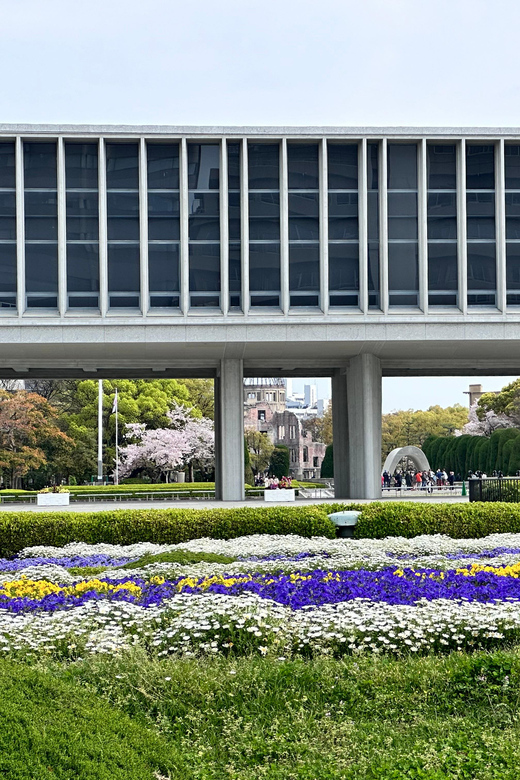
At $67 per person, the tour is not the cheapest way to walk around Hiroshima. You could visit the park and Dome independently for little money, then pay separately for the museum and castle.
The value comes from the guide’s time and the amount of interpretation packed into three hours. You receive museum admission, a walking tour, a traditional snack, and a route linking the memorial district with the castle. The guide may also show surviving buildings and less obvious locations that are easy to miss alone.
The price makes the most sense if you are short on time, want help with the museum’s difficult material, or prefer asking questions as you go. It is less compelling if you already know Hiroshima well, plan to spend a full day at the museum and park, or have no interest in the castle.
The tour is described as a private experience in several accounts, but the supplied activity details do not specify a fixed group size. Ask about the group arrangement before booking if privacy is important to you.
Timing, walking, and practical concerns
The formal duration is three hours. The route begins at the taxi stand near the Peace Memorial Museum, at 1-2 Nakajimacho, and includes a 10-minute walk between the Atomic Bomb Dome and Hiroshima Castle.
You should wear comfortable clothing and shoes. The visit has both indoor and outdoor sections, and the schedule can feel ambitious if you read every museum panel, stop for many photographs, or need frequent breaks.
The experience is listed as wheelchair accessible, but the same information also says it is not suitable for wheelchair users. That is a direct contradiction. If you use a wheelchair, contact the provider before booking and ask about the actual route, museum access, castle access, and walking sections.
The activity is not suitable for people over 95 according to the supplied conditions. Free cancellation is available up to 24 hours before the tour for a full refund, and you can reserve now and pay later. Starting times vary, so check availability for your date.
Who should book this experience?
I would choose this tour if you are visiting Hiroshima for the first time and want the memorial sites explained with care. It is also a good fit for families, students, couples, and solo visitors who prefer conversation to a self-guided route.
You should book it if you want:
- A guide through the Peace Memorial Museum
- Help understanding the monuments in Peace Memorial Park
- A clear explanation of the Atomic Bomb Dome and hypocenter
- A chance to see bomb-damaged everyday buildings
- A short introduction to samurai culture and Hiroshima Castle
- Local advice about food and places to see afterward
I would hesitate if you want a slow, museum-heavy day. One hour in the museum may not be enough for careful readers, and the castle portion may feel secondary. In that case, visit the memorial district independently and give yourself more time.
Should you book the Hiroshima Peace Museum and Castle Tour?
Book it if you want Hiroshima’s central sights connected by a thoughtful guide rather than handled as separate stops. The museum and Peace Park are the heart of the experience, while the Dome, hypocenter, surviving buildings, shrine, and castle build a wider picture of the city.
The $67 price is fair when you use the guide well: ask questions, request more context, and tell the guide what matters to you. I would confirm the exact castle admission, group size, guide language, and wheelchair arrangements before booking.
For a first visit, this is a meaningful and efficient introduction to Hiroshima. Just come prepared for difficult museum exhibits, wear good shoes, and remember that the castle is an added cultural stop, not the main event.
FAQ
How long does the Hiroshima tour last?
The tour lasts three hours. The planned visits include about one hour at the Peace Memorial Museum, one hour in Peace Memorial Park, 10 minutes at the Atomic Bomb Dome, a 10-minute walk, and about 40 minutes at Hiroshima Castle.
What is included in the price?
The $67 price includes the walking tour, Peace Memorial Museum admission, a tour guide, and traditional snacks from Hiroshima.
Is Hiroshima Castle admission included?
No. Castle tickets are not included in the tour price.
Is the Peace Memorial Museum audio guide included?
No. The optional museum audio guide costs extra.
Where does the tour begin?
The meeting point is the taxi stand near the Peace Memorial Museum, at 1-2 Nakajimacho.
Which languages are available?
The listed guide languages are English, Hindi, Malay, and Urdu.
Will I see the Atomic Bomb Dome and the hypocenter?
Yes. The tour includes a guided visit to the Atomic Bomb Dome and an exploration of the hypocenter.
Are graphic exhibits shown during the tour?
Some museum exhibits depict the shocking effects of the atomic bomb. You should ask about the content beforehand if you or someone in your group may find this difficult.
Newly walked in Japan
- Tokyo: Edo Castle and Imperial Palace Guided Walking Tour★ 5.0 · 6 reviews
- (Ticket Included) Explore Osaka Castle & Museum of History★ 4.8 · 21 reviews
- Peace Memorial Park, Hiroshima Castle, & Garden Private Tour★ 4.8 · 7 reviews
- Osaka/kyoto: Himeji Castle, Kobe. Luxury Day Trip with Guide★ 5.0 · 2 reviews
- Osaka: Osaka Castle – Tsuruhashi – Tennoji (Spanish Guide)★ 4.7 · 10 reviews
- Osaka: Osaka Castle 3 hours Historical Walking Tour★ 4.6 · 14 reviews
- Osaka: Early Morning Osaka Castle Guided Tour, Avoid Crowds★ 4.9 · 12 reviews
- Osaka: Explore Every Bit of Osaka Castle in 3 Hours★ 5.0 · 5 reviews
Japan Castle Tours, compared.
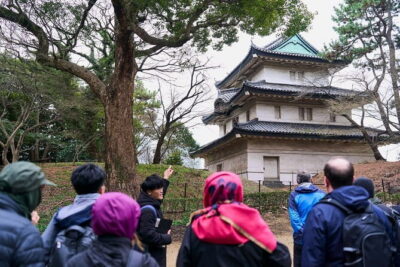
Tokyo Castle & Imperial PalaceーShogun Walking Tour
Read our review →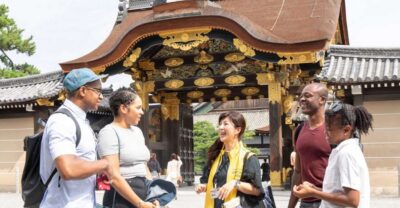
Nijo-jo Castle and Ninomaru Palace Guided Tour
Read our review →
Ultimate Osaka Walking Tour: Castle, Dotonbori & Hidden Gems
Read our review →Tokyo Castle & Imperial PalaceーShogun Walking Tour
Read our review →
Nijo Castle, Kiyomizu & Fushimi Inari Guided Tour
Read our review →
Osaka Castle Walking Tour and Castle Tower Admission
Read our review →
Imperial Palace East Garden and Edo Castle Walking Tour in Tokyo
Read our review →Browse the lists this tour appears in