
Review · ITALY
Manta: Manta Castle Entry Ticket
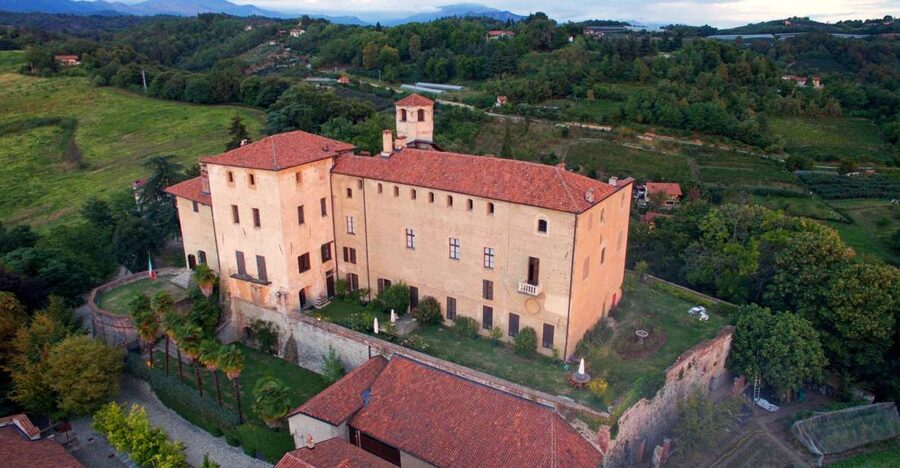
Manta Castle gives you something better than a quick look at old stone walls: a 15th-century Baronial Hall filled with bold, unusual frescoes. Against the sharp profile of Monte Viso, you’ll see knights, worthy women, the Fountain of Youth, and a god of Love watching over the room.
I like two things here. First, the art is genuinely distinctive rather than decorative background. Second, the ticket also opens the kitchens, cellars, church, and shaded grounds, so you get a fuller picture of castle life for $12 per person. The main consideration is the one-hour duration, which calls for a steady pace if you want to see every room.
Key points at a glance
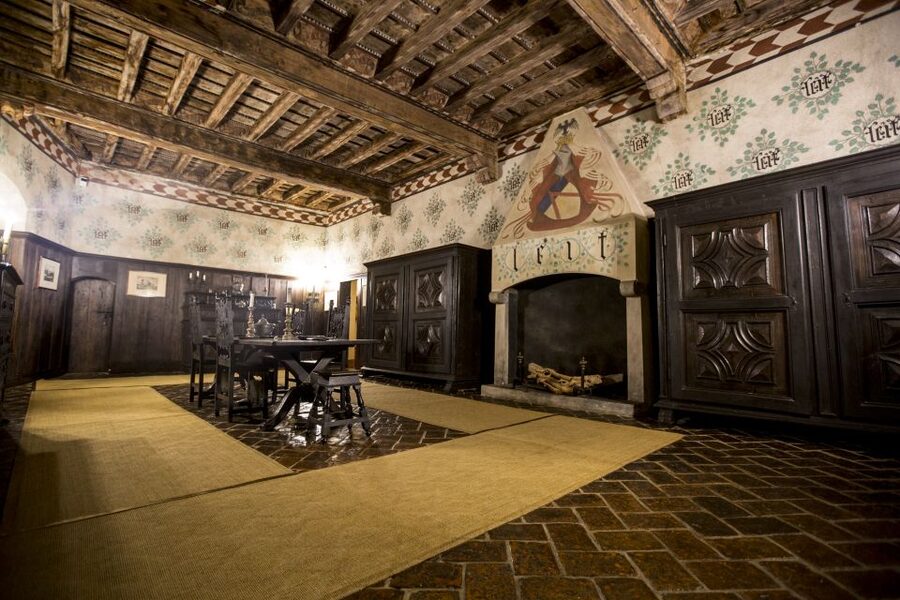
- The Baronial Hall: See the Fountain of Youth and the nine worthies and nine worthy women in remarkable late-Gothic frescoes.
- Monte Viso views: The Cottian Alps frame the castle and its grounds, with views toward the Varaita Valley.
- Several layers of history: The fortress began as a 13th-century military outpost, became a noble residence in the 15th century, and gained a Mannerist room in the 16th century.
- The Hall of Grotesques: Look up at a ceiling of painted decoration and stucco inspired by Raphael’s Vatican loggias.
- Everyday castle spaces: Visit the large kitchen, vaulted cellars, immense fireplace, and the castle church.
- Simple, flexible admission: The ticket costs $12, lasts about one hour, is wheelchair accessible, and can be canceled up to 24 hours before the visit for a full refund.
A medieval fortress with an Alpine backdrop
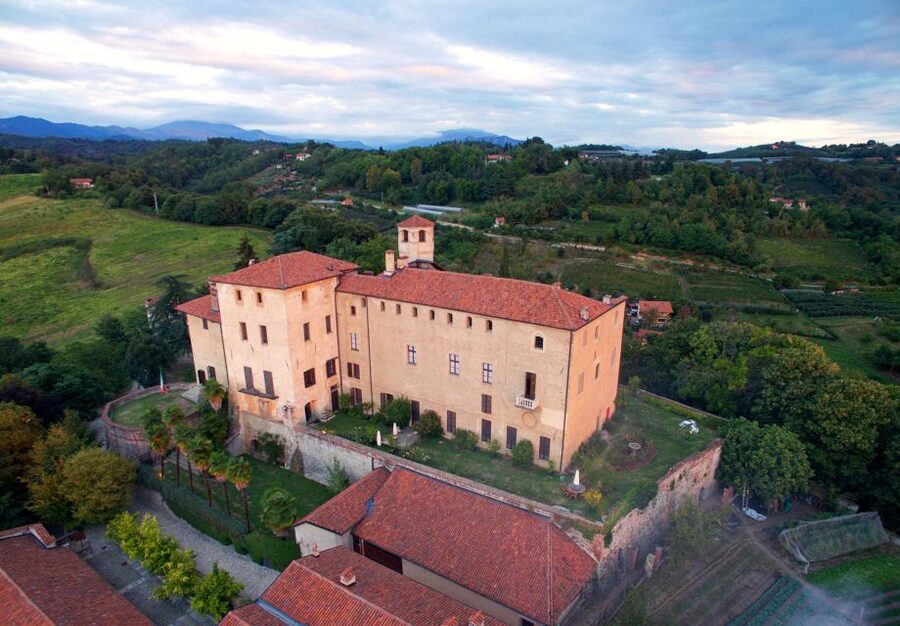
Manta Castle sits about 40 kilometers from Turin in Piedmont, with the Cottian Alps forming a dramatic backdrop. The pointed bulk of Monte Viso gives the setting a strong sense of place. This is not a castle floating in an empty field. It belongs to the hills around the Varaita Valley, and the views help explain why this site mattered as both a stronghold and a noble residence.
The first fortress was built in the 13th century as a military outpost. Its purpose was practical: protection, control, and a secure base. In the 15th century, Valerano, an enlightened ruler of the Marquisate of Saluzzo, reshaped the complex into a family home connected with the fiefdom of La Manta.
That change from fortress to residence is the key to understanding your visit. You are not seeing only defensive architecture. You are also seeing a place where a powerful family used art, ceremony, religion, and grand rooms to express its ideals.
The castle forms part of The Dukes of the Alps, an itinerary devoted to the history of the House of Savoy. You do not need to know that wider story to appreciate Manta Castle, but the connection gives the visit a larger Piedmont setting.
More Castle Entry Tickets in Italy
- Milan: Sforza Castle Entry Ticket with Digital Audio Guide
★ 4.0 · 2,675 reviews - Trieste: Miramare Castle & Museum Entry Ticket & Audio App
★ 4.2 · 213 reviews - San Leo: Fortress Entry Ticket and Cagliostro’s Prison
★ 4.2 · 38 reviews
The Baronial Hall and its strange, memorable paintings
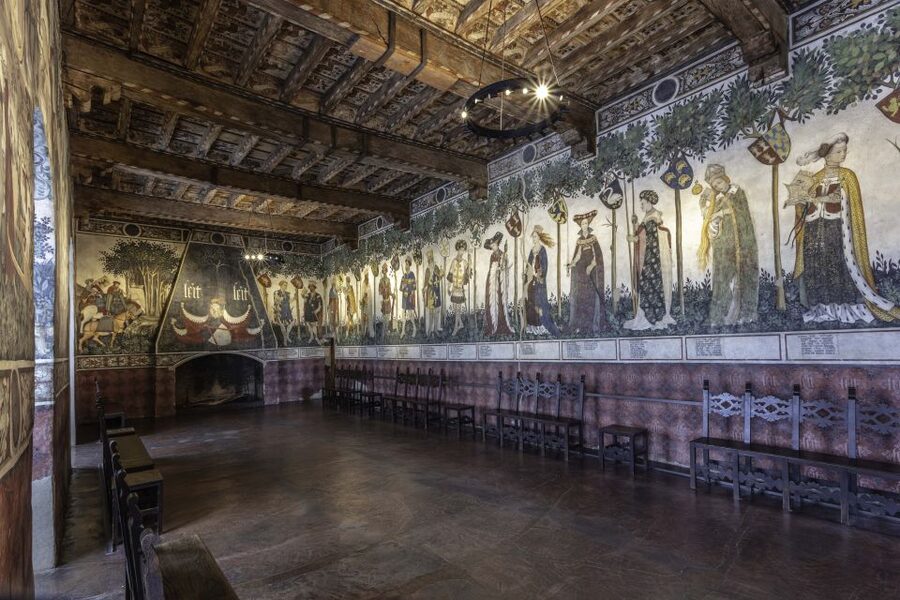
The main reason I would make time for Manta Castle is the Baronial Hall. Valerano commissioned its frescoes in the 15th century, when courtly culture placed great value on courage, morality, noble behavior, and the ideals of knighthood.
On the southern wall, you’ll find a scene based on the myth of eternal youth. The image centers on a Fountain of Youth, with the god of Love above it. The subject draws on the chivalrous tale Roman de Fauvel, giving the room a storybook quality without making it feel childish.
Look closely at the figures and clothing. The frescoes are not just a set of isolated scenes. They reflect the way 15th-century aristocratic culture imagined youth, desire, honor, and social rank. The result is more unusual than the typical battle scene or religious panel found in many medieval buildings.
On the opposite side, the nine worthies and nine worthy women represent classical and chivalrous ideals. They are shown in 15th-century clothing, which creates an amusing but useful contrast. Ancient heroes and exemplary women appear dressed in the fashion of the period that commissioned the paintings.
I like this room because it asks you to think about how medieval and Renaissance nobles saw themselves. The art is not simply telling you what happened in the past. It is showing you the values that a ruling family wanted to project.
Give yourself time here. The one-hour visit is enough for the castle, but not if you hurry past the paintings. Pause to compare the two walls, notice the costumes, and consider how the Fountain of Youth and the worthies present two different sides of noble life: pleasure and virtue.
The Hall of Grotesques and its Renaissance flair
The castle changed again in the mid-16th century. The Hall of Grotesques dates from this later renovation, and its design has a different feel from the late-Gothic Baronial Hall.
The ceiling combines painted decoration and stucco in a clear Mannerist style. Its inspiration came from the decoration in Raphael’s loggias at the Vatican. That reference matters because it shows how ideas from major Italian artistic centers reached a noble residence in Piedmont.
The word grotesque can sound unpleasant, but here it refers to a decorative style of intricate forms, figures, and ornament. Look up as you enter. The ceiling is the feature to notice, and it rewards a slower glance than a quick walk through the room.
The Hall of Grotesques also helps you read the building as a living family home rather than a single-period monument. The castle was altered over time, with each generation adding its own taste. The result is a layered visit: military beginnings, 15th-century courtly art, and 16th-century Mannerist decoration.
Kitchens, cellars, and the practical side of castle life
The grand rooms tell you how the family wanted to be seen. The service spaces tell you how the household actually functioned.
The large kitchen has a vaulted ceiling and an immense fireplace. Even without a full reconstruction of daily life, the scale of the fireplace gives you a sense of the work required to feed a noble household. This is the sort of room I appreciate because it brings the visit down from ideals and symbols to heat, food, labor, and storage.
The cellars add another useful layer. They are not as visually showy as the painted halls, but they help you understand the castle as a working complex. A noble residence needed places for supplies and household tasks, not just rooms for ceremony.
There is no food or restaurant included with the ticket, so plan to eat separately. That is easy to overlook when an outing is described mainly through its rooms and art. Treat this as a cultural visit, not a meal stop.
Same walls, a different way in:
- Milan: Sforza Castle and Michelangelo’s Pietà Rondanini Tour
★ 4.7 · 1,119 reviews - From Siena: Chianti and Castles Tour with Wine Tastings
★ 4.6 · 631 reviews - Milan: The Last Supper & Sforza Castle Guided Tour
★ 4.6 · 610 reviews - Milan: Last Supper and Sforza Castle Guided Tour
★ 4.6 · 498 reviews
The castle church and scenes from the Passion
Valerano also commissioned the castle church. Its frescoes focus on the Passion of Christ, giving the religious side of the complex a clear place beside the family rooms and service areas.
This is a worthwhile stop because it shows how faith shaped the castle’s daily and ceremonial life. The church was not an unrelated building nearby. It was part of the same world created by the family that commissioned the Baronial Hall.
The Passion frescoes also create a contrast with the secular paintings in the main hall. In one area, you see youth, love, heroes, and moral ideals. In another, you encounter the central religious story of suffering and devotion. Taken together, the rooms show how art served several purposes inside a noble residence.
The grounds and views toward the Varaita Valley
Save a few minutes for the shaded grounds. They provide an attractive change after the enclosed rooms and offer views over the hillsides of the Varaita Valley.
The setting is especially important at Manta. Monte Viso gives the castle its visual anchor, while the surrounding hills connect it to the wider Piedmont countryside. You do not need a long walk to enjoy this part of the visit. Simply stepping outside gives you a different view of the building and its position.
The grounds are also useful if you need a quiet pause after concentrating on the frescoes. The interior asks you to look upward and study details. Outside, you can slow down and take in the broader setting.
If you arrive by camper, one practical detail is worth knowing: parking beside the elementary school has been used for access to the castle. From there, expect an uphill approach. That may matter more than the short one-hour duration, especially if you have mobility concerns or heavy equipment.
How the one-hour visit works
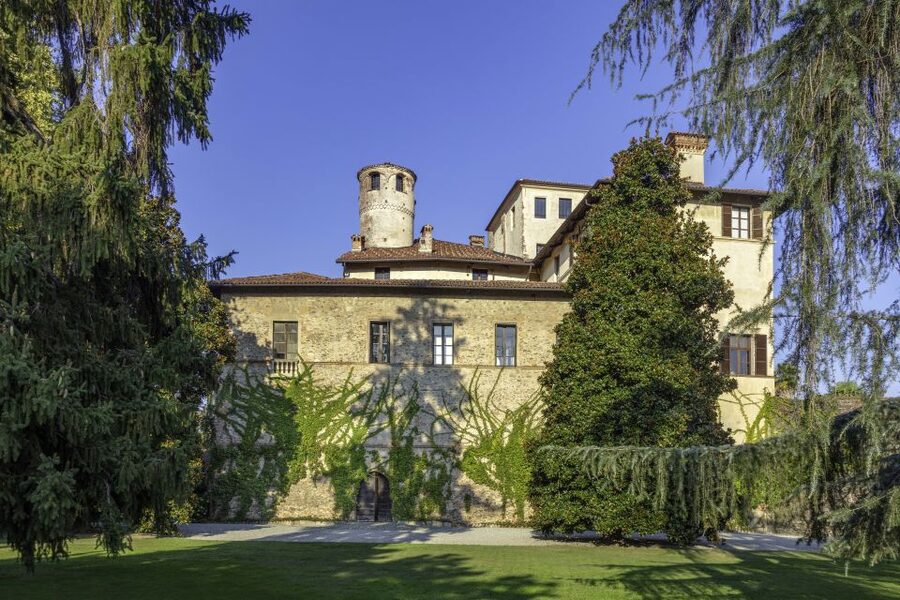
The stated duration is one hour, and I would treat that as a focused visit rather than a leisurely afternoon. Start with the Baronial Hall, since its frescoes are the most important part of the castle. Then see the Hall of Grotesques, church, kitchen, cellars, and grounds.
A sensible order looks like this:
- Begin with the Baronial Hall and study both frescoed walls.
- Move to the Hall of Grotesques and look carefully at the ceiling.
- Visit the church and its Passion scenes.
- Finish with the kitchen, cellars, and grounds if time allows.
The precise room order may vary, but the principle is useful: prioritize the painted halls before the supporting spaces. If you are especially interested in art, you may want to spend most of your time indoors and use the grounds for a brief final look.
If you want to read every label or linger over each detail, one hour may feel short. If you keep moving and know what matters most, it is a good length for a compact cultural stop.
Is $12 good value?
At $12 per person, the ticket is reasonably priced for the amount included. You are not paying only to enter a courtyard. The admission covers a castle with several distinct areas, including the Baronial Hall, Hall of Grotesques, church, kitchen, cellars, and grounds.
The value is strongest for people who care about original interiors and art. The Baronial Hall alone gives the visit a clear purpose, while the other spaces make the experience feel more complete. The Alpine setting adds another benefit without requiring a separate excursion.
The price is less compelling if you expect a large museum, extensive displays, or a full-day attraction. This is a focused visit. You pay for access to a specific historic residence, not a long list of activities.
The ticket includes entry only. Food and restaurant service are not included, so keep that cost separate when planning your day.
Practical details before you book
The experience is provided by FAI, Fondo Ambiente Italiano. The ticket costs $12 per person, and the visit lasts one hour. Starting times depend on availability, so check the schedule before you settle your plans.
The castle is wheelchair accessible. That is useful information, though the approach can still matter in practice. If you are arriving by camper or need an easier route, note the uphill walk from parking beside the elementary school.
You can cancel up to 24 hours in advance for a full refund. A reserve-now-and-pay-later option is also available, which gives you some flexibility if your Piedmont plans are still moving around.
The booking process is intended to be quick. That helps if you are adding Manta Castle to a day based around Turin or the surrounding area and do not want a long planning task for a one-hour stop.
Who should visit Manta Castle?
I would recommend this visit to anyone interested in medieval and Renaissance art, especially visitors who prefer original rooms to large modern museums. The unusual Fountain of Youth scene and the nine worthies make the Baronial Hall more memorable than a standard fortress tour.
It also suits people building a day around Piedmont’s castles and the House of Savoy. Manta offers a change of pace from grand royal residences, with a more intimate setting and a strong link between art, family life, and local power.
Families with older children may enjoy the painted stories and unusual figures. The one-hour length is manageable, though younger children may have little patience for close study of ceilings and frescoes.
You should think twice if you want a guided tour, a long activity, or a site filled with restaurants and extra services. The information provided here does not identify a guide or promise a guided presentation. You receive entry to explore the castle, so your enjoyment will depend on your interest in looking carefully at the rooms and paintings.
Should you book the Manta Castle ticket?
Book it if you want a compact, affordable cultural stop near Turin with memorable frescoes and mountain views. The Baronial Hall is the deciding factor. If the Fountain of Youth, the worthies, and late-Gothic art appeal to you, $12 is a fair price.
I would also book it as part of a Piedmont castle route, especially if you value smaller historic sites over crowded headline attractions. Keep your expectations practical: allow about an hour, arrange food separately, and plan for the uphill approach if arriving by camper.
Skip it if your schedule has no room for a focused art and history visit, or if you want a full-day castle experience. For the right visitor, though, Manta Castle offers a rare mix of courtly paintings, working rooms, religious art, and Cottian Alpine scenery in one manageable stop.
FAQ
How much does entry to Manta Castle cost?
The entry ticket costs $12 per person.
How long does a visit to Manta Castle take?
The stated duration is one hour. Starting times depend on availability.
What does the Manta Castle ticket include?
The ticket includes entry to Manta Castle. You can visit the Baronial Hall, Hall of Grotesques, service spaces, castle church, and grounds.
Is food included with the ticket?
No. Food and restaurant service are not included.
Is Manta Castle wheelchair accessible?
Yes, the activity is listed as wheelchair accessible.
Can I cancel the Manta Castle ticket?
Yes. You can cancel up to 24 hours in advance for a full refund. A reserve-now-and-pay-later option is also available.
Newly walked in Italy
- HIKING TOUR: VARENNA, Castle of VEZIO Villa MONASTERO, FIUMELATTE★ 5.0 · 48 reviews
- Castles of Puglia Day Trip from Bari★ 4.5 · 7 reviews
- Enchanted Castle of Sciacca – Museum Tickets★ 3.5 · 63 reviews
- Taormina; Taormina Castle Tour★ 3.8 · 11 reviews
- St. Angel’s Castle: 2-Hour Private Tour★ 5.0 · 9 reviews
- Milan: Skip-the-line Sforza Castle and Museums Private Tour★ 4.7 · 7 reviews
- Siena: Tour and Wine Tasting in a Tuscan Private Castle★ 4.9 · 50 reviews
- Sforza Castle & Michelangelo’s Pietà Rondanini Guided Tour★ 4.7 · 3 reviews
Castle Entry Tickets, compared.

Edinburgh Castle: Guided Walking Tour with Entry Ticket
Read our review →
Castle Tour with Local Guide and Entry Ticket
Read our review →
Prague Castle 2.5-Hour Tour Including Admission Ticket
Read our review →
Edinburgh Castle: Guided Walking Tour with Entry Ticket
Read our review →
Prague Castle and Lobkowicz Palace Entry Tickets
Read our review →
Alcázar and Cathedral Entry Ticket and Guided Tour
Read our review →Browse the lists this tour appears in