
Review · ROME
Rome: Castle Sant’Angelo Ticket w/ audioguide option
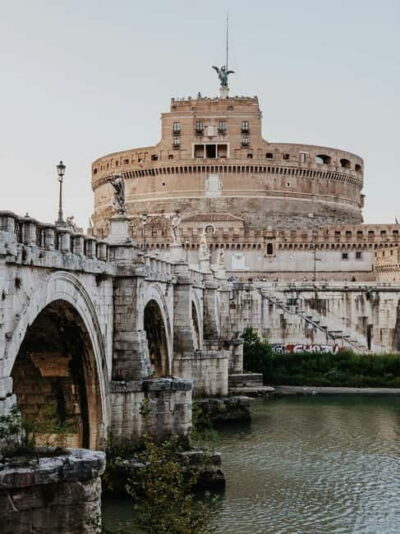
Castel Sant’Angelo is one of Rome’s most unusual monuments because it has been a Roman emperor’s tomb, papal fortress, prison, and execution site. This ticket gets you through a separate entrance, then leaves you free to explore the castle without being tied to a group or a fixed spoken tour.
I like the freedom to move at your own pace, especially if you want time in the papal rooms or need regular breaks. I also like the rooftop, where you can look over the Tiber toward St. Peter’s Dome. The main drawback is that the ticket does not include a live guide, and the optional audio guide costs extra, so you will need to supply some of the context yourself.
Key points to know before you book
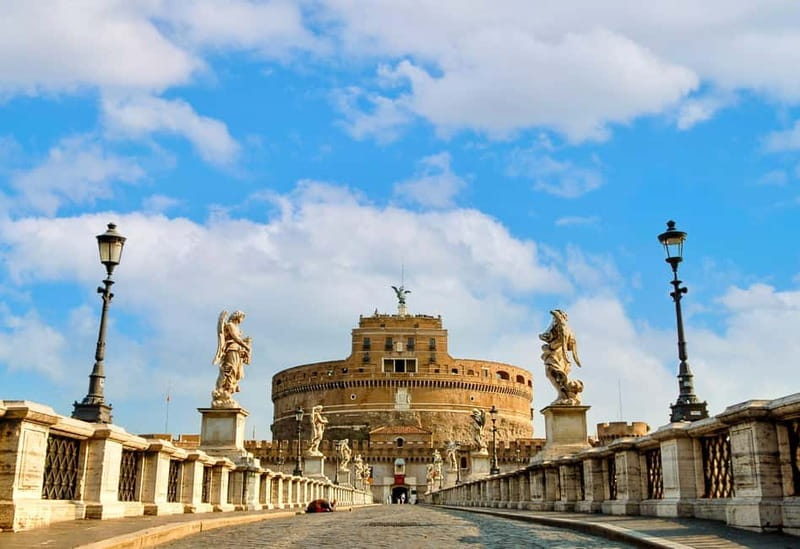
- A tomb turned fortress: The castle began as Hadrian’s mausoleum in the second century AD before taking on several very different roles.
- Separate entrance: Skip-the-line access can save useful time in Rome, though you still need to find the host by the Angel Statue.
- Explore independently: You can visit the papal rooms, prison areas, spiral staircase, and rooftop in your own order.
- The rooftop is the payoff: Expect broad views of Rome, the Tiber, and St. Peter’s Dome.
- Optional audio guide: Audio commentary is available in English, French, Italian, and Spanish, but it is not included in the basic ticket.
- Plan for stairs and restrictions: The site is not suitable for wheelchair users or people with mobility impairments, and large bags, luggage, strollers, weapons, and pets are not allowed.
Why Castel Sant’Angelo feels different from other Roman monuments
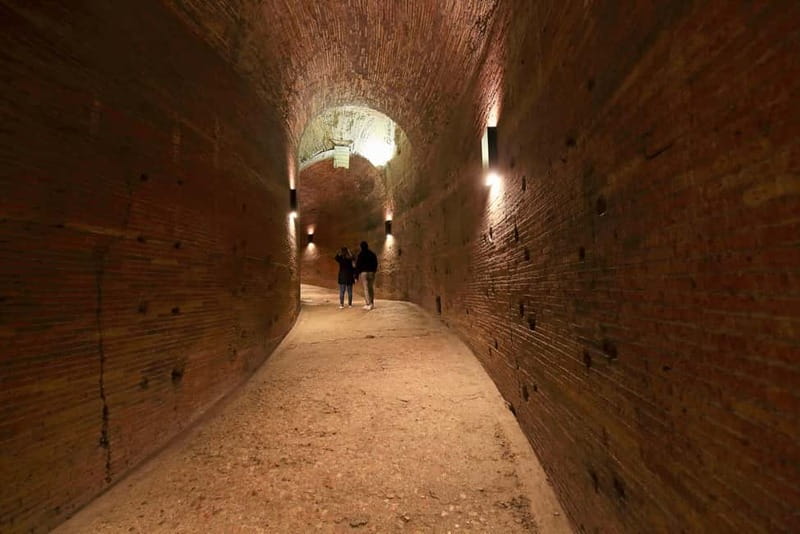
Many Roman sites present one main story. Castel Sant’Angelo gives you several, stacked one on top of another.
The building started as the tomb of Emperor Hadrian. His ashes are said to remain inside, placing the monument in the second century AD. Later, the structure became a papal fortress, a prison, and a place of execution. You are not simply looking at a grand old building. You are walking through a place that changed with Rome’s rulers and dangers.
That change of purpose is the castle’s strongest feature. A tomb suggests ceremony and death. A fortress suggests defense. The prison rooms suggest fear and punishment. The papal apartments bring art, comfort, and political power into the same building. As you move through the site, the contrast gives the visit more force than a standard palace tour.
The monument also has a connection with the Vatican through a protected secret passage. Popes could use the passage to reach the castle in an emergency. This dramatic escape route helped inspire scenes connected with Angels and Demons, though the castle itself is more interesting than its film connection.
More Castle Tours in Italy:
- Milan: Sforza Castle Entry Ticket with Digital Audio Guide
★ 4.0 · 2,675 reviews - Milan: Sforza Castle and Michelangelo’s Pietà Rondanini Tour
★ 4.7 · 1,119 reviews - From Siena: Chianti and Castles Tour with Wine Tastings
★ 4.6 · 631 reviews
Meeting the host near the Angel Statue
Your visit begins outside Castel Sant’Angelo. Look for the activity team directly in front of the entrance, near the Angel Statue. The host or greeter wears a light blue jacket or T-shirt, which should make the meeting point easier to spot in a busy part of Rome.
The host service is available in English, French, Italian, Spanish, Portuguese, Norwegian, Thai, German, Polish, and Russian. This does not mean you receive a guided tour in all those languages. The host helps with entry, while the optional audio guide is offered in English, French, Italian, and Spanish.
Have your passport or ID card with you. The booking information also asks you to include your country code and phone number in case the team needs to contact you. That is a small step, but it matters if the entry time changes or the staff needs to confirm your ticket.
The entry is described as skip-the-line through a separate entrance. This is useful in Rome, where a short wait at one major monument can disrupt half a day. Still, skip-the-line does not mean you can ignore the scheduled entry time. Check the available starting times carefully, and contact the provider if you need to reschedule on the same day.
Inside Hadrian’s ancient tomb
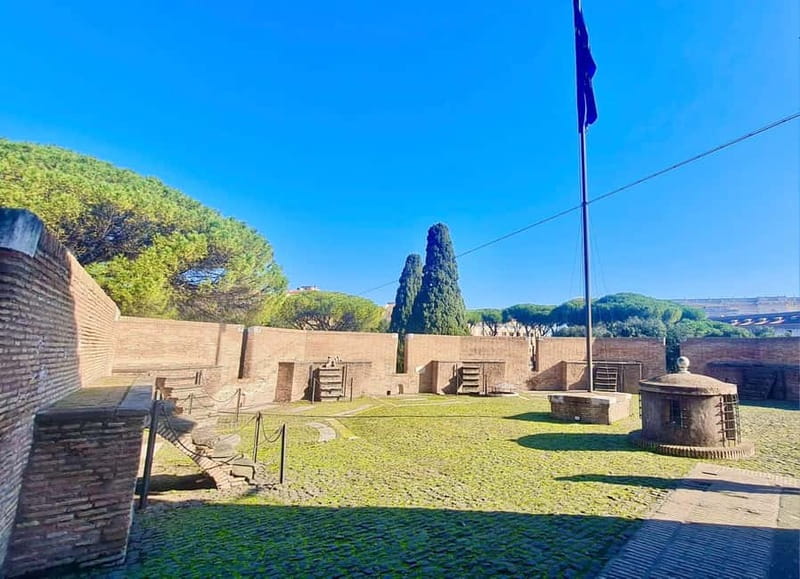
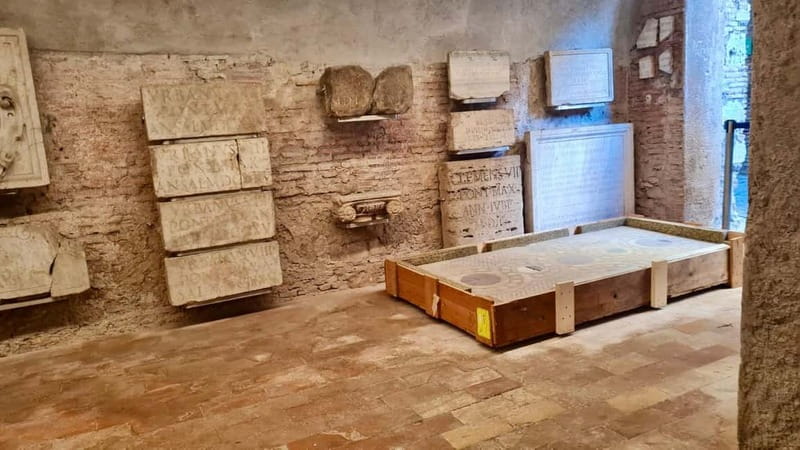
The castle’s first identity was as the mausoleum of Hadrian, the Roman emperor connected with the building’s original design. The ashes of Hadrian are kept inside, according to the supplied information, which gives the central rooms a direct link with ancient Rome.
You will visit the Room of the Ashes of Hadrian. This is one of the most important stops because it explains why the massive structure exists at all. Before it became a papal stronghold, it was a monument to an emperor’s death and memory.
The castle’s thick, defensive form can make the ancient tomb feel more like a military building than a traditional Roman mausoleum. That is part of its appeal. The building’s later uses covered up or changed its original purpose, so the visit works best when you keep the full timeline in mind.
You do not need to rush from room to room. The ticket allows you to explore on your own, and that suits this monument. Take time to notice how the character of the building changes as you move from the ancient sections toward the rooms used by the papacy.
Papal rooms and the castle’s political side
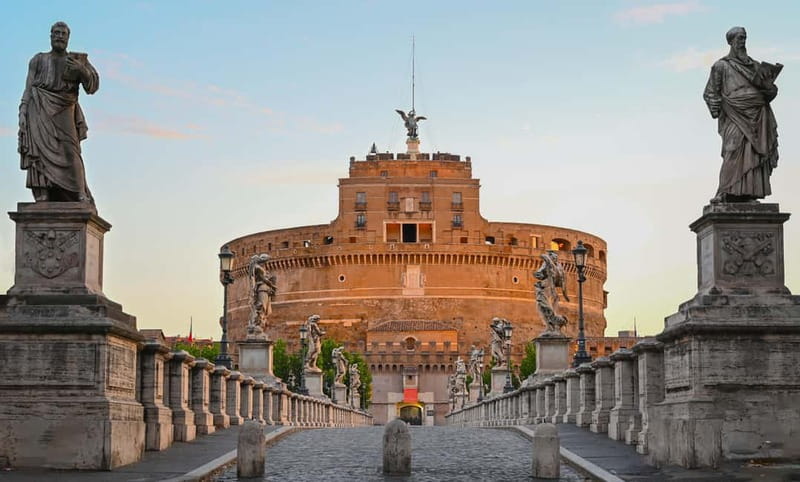
In the early Renaissance, Castel Sant’Angelo became a papal fortress. The Papal Rooms show the building’s more formal and powerful side. These spaces help explain why popes relied on the castle when Rome was under threat.
The rooms are valuable because they add a human scale to the fortress. A defensive monument can feel hard and impersonal, but the papal apartments reveal the people who occupied it. You get a stronger sense of the castle as a working residence and refuge, not only as a military shell.
The connection to the Vatican makes these rooms especially important. The secret walkway allowed popes to run from the Vatican Palace to the castle during danger. You will not simply be visiting an isolated fortress. You are seeing one part of a larger defensive system tied to the center of Catholic power.
If you have already visited St. Peter’s Basilica or the Vatican area, the visit gains extra meaning. The rooftop view helps you understand the physical relationship between the castle, the Tiber, and St. Peter’s Dome.
Same walls, a different way in:
- Milan: The Last Supper & Sforza Castle Guided Tour
★ 4.6 · 610 reviews - Milan: Last Supper and Sforza Castle Guided Tour
★ 4.6 · 498 reviews - Montalcino: Brunello Wine Tasting & Lunch in a Tuscan Castle
★ 4.6 · 324 reviews - Lake Garda: Historic Castle Cruise with Wine Tasting
★ 4.5 · 241 reviews
Prison rooms, famous inmates, and a darker story
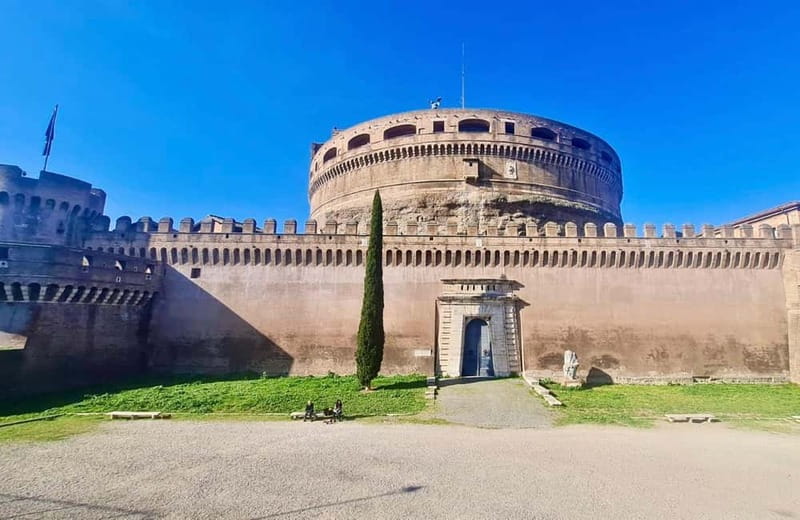
Castel Sant’Angelo also served as a prison. Its cells housed famous prisoners, including the goldsmith Benvenuto Cellini and the charlatan Cagliostro.
These names give the prison section a personal edge. Benvenuto Cellini was an important Renaissance goldsmith, while Cagliostro became known as a mysterious and controversial figure. Their presence in the castle’s story reminds you that imprisonment here was not limited to ordinary criminals. The fortress was part of the machinery of papal authority.
The castle also functioned as an execution site. That fact can be easy to overlook when you are focused on the views and grand rooms, but it is central to understanding the monument. The building offered protection to powerful people while also holding prisoners under harsh conditions.
The prison section may not be the easiest part of the visit for anyone expecting only beautiful rooms. That is a benefit if you want a fuller picture of Rome’s past. It is a consideration if you prefer a light sightseeing stop built around art and scenery.
The spiral staircase and changing levels
The spiral staircase is another key part of the visit. It connects the castle’s different levels and gives you a sense of the building’s unusual structure.
Moving through the staircase is not like walking across a flat museum. The castle requires you to go up and down through spaces built for different purposes. That physical movement helps you understand how the tomb became a fortress and then a papal refuge.
You should take the site’s mobility limits seriously. It is not suitable for wheelchair users or people with mobility impairments. Baby strollers are not allowed either. The stairways, changing levels, and historic layout make this a poor choice if you need step-free access.
If you are visiting with older relatives who can manage stairs but need breaks, the self-paced format can help. One useful feature of the independent visit is that you do not have to keep up with a guide or a group. You can pause when needed and continue when ready.
The rooftop view over the Tiber and St. Peter’s
The rooftop is the natural finish to the visit. From above, you can look across Rome, along the Tiber, and toward St. Peter’s Dome.
This view is not just a pleasant photo stop. It explains the castle’s location. You can see why a powerful fortress was built here and why its link to the Vatican mattered. The rooftop also gives you a different view of St. Peter’s than you get from ground level.
Give yourself enough time for this part. If you rush through the lower rooms, you may reach the rooftop with only a few minutes left. The stated activity duration is valid for one hour, and the available starting times should be checked before booking. Since the exact visit conditions can depend on the entry slot, do not assume you will have unlimited time inside.
The view is likely to be the biggest reward for visitors who are less interested in prison history or papal interiors. For history-minded visitors, it works better as the final piece of the story. You have seen the monument’s original purpose, its military role, and its connection to the Vatican. From the roof, Rome’s geography brings all of it together.
Audioguide or independent exploration?
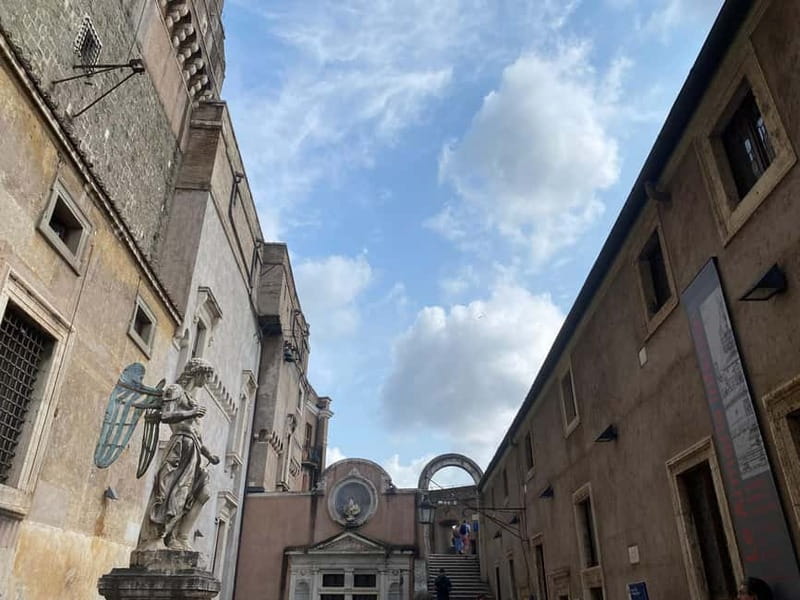
The basic ticket includes skip-the-line entry, but no live guide and no audio guide. You can visit independently, which is a good fit if you prefer silence, flexibility, and your own pace.
The optional audio guide is available in English, French, Italian, and Spanish. It can add useful context, especially because the building’s history covers several periods. Without commentary, you may recognize the main rooms and views but miss some of the links between Hadrian’s tomb, the papal fortress, the prison, and the Vatican passage.
I would choose the audio guide if this is your first visit and you want the building explained as you move through it. I would skip it if you have already read about Castel Sant’Angelo or plan to use your own guidebook. The important point is to check the booking details so you know if the audio guide has been added. It is not included automatically.
The host languages are much broader than the audio guide languages. That is helpful for meeting and entry support, but it should not be confused with a full guided tour.
Is the $30 ticket good value?
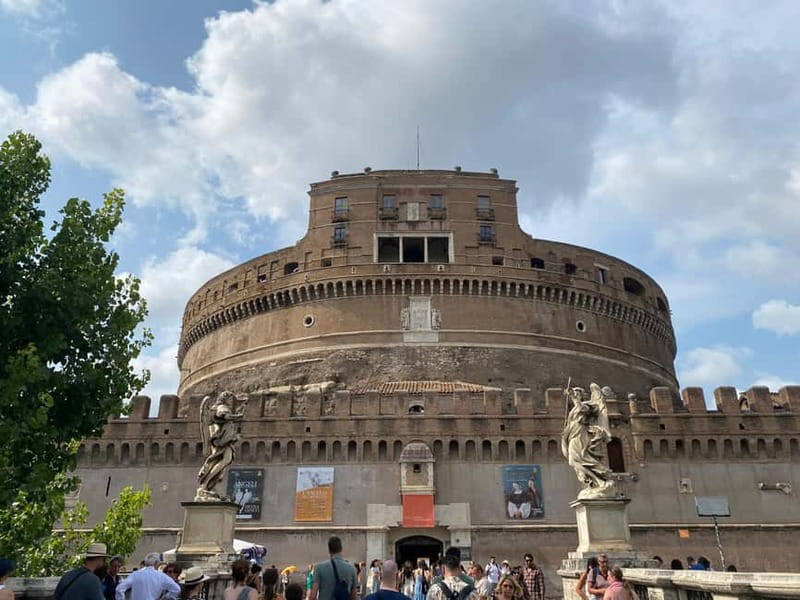
At about $30 per person, this is not the cheapest monument ticket in Rome. Its value depends on what you want from the visit.
The price makes more sense if the separate entrance saves you a long wait and you value the freedom to explore without a group. It also suits visitors who want one ticket covering several types of experience: ancient Roman history, papal rooms, prison stories, a spiral staircase, and a rooftop view.
The value is weaker if you expect a live historian, transportation, or a full audio tour included in the price. None of those are part of the basic ticket. You also need to make your own way to the castle and find the host near the Angel Statue.
For a family or small group, the self-paced format can be useful. One published experience describes parents who needed frequent breaks and appreciated being able to visit at their own speed. That is a practical advantage, especially in a large fortress where a rigid group schedule can become tiring.
The overall rating supplied for the activity is 3.6 from 25 reviews. I would read that as a sign to keep expectations precise: this is an entry arrangement with optional audio support, not a richly guided history tour.
Timing, bags, and practical restrictions
The activity is listed as valid for one hour, with starting times shown during booking. Treat the chosen time as important. If you need to change your entry, contact the provider, and note that same-day changes may be possible only by arrangement.
Large bags and luggage are not allowed. Baby strollers are also prohibited, so plan carefully if you are visiting with young children. Weapons, sharp objects, alcohol, and drugs are not permitted, and pets cannot enter except for assistance dogs.
Free cancellation is listed, but the supplied details give two different deadlines: three days in advance in one place and 24 hours before the tour in another. Check the cancellation terms shown at the time of booking rather than relying on the shorter or longer deadline.
There is no transportation included. The experience ends back at the meeting point, but you should arrange your own route to Castel Sant’Angelo and allow time to find the Angel Statue and the host.
Who should book Castel Sant’Angelo?
I would recommend this experience if you want a major Roman monument without committing to a long guided tour. It is especially suitable for independent visitors, couples, families who need breaks, and anyone interested in the overlap between ancient Rome and papal Rome.
It is also a good choice if rooftop views matter to you. The view toward St. Peter’s Dome and over the Tiber gives the visit a strong finish.
I would be cautious if you need wheelchair access, step-free routes, a stroller, or a large bag. I would also look elsewhere if your priority is a live guide who explains every room. In that case, the optional audio guide may help, but it still will not provide the personal exchange of a guided visit.
Should you book this ticket?
Book it if you want fast entry and independent time inside one of Rome’s most layered monuments. The castle offers more than a view: you get Hadrian’s tomb, papal rooms, prison history, the spiral staircase, and a direct link to the Vatican.
Skip it if you need accessible facilities, included transportation, or a live guide. For everyone else, the $30 price is reasonable when the separate entrance saves time and the freedom to explore matters more to you than a formal tour.
FAQ
What does the Castel Sant’Angelo ticket include?
The ticket includes skip-the-line entry to Castel Sant’Angelo through a separate entrance. It does not include transportation, a live guide, or an audio guide unless the optional audio guide is added.
Is an audio guide included?
No. The audio guide is optional. It is available in English, French, Italian, and Spanish.
What can I see inside Castel Sant’Angelo?
You can visit the Papal Rooms, the spiral staircase, the Room of the Ashes of Hadrian, the prison areas, and the rooftop. The rooftop offers views of Rome, the Tiber, and St. Peter’s Dome.
Where do I meet the host?
Meet the team directly in front of the entrance, near the Angel Statue. Staff wear a light blue jacket or T-shirt.
Which languages are available from the host or greeter?
Host support is available in English, French, Italian, Spanish, Portuguese, Norwegian, Thai, German, Polish, and Russian.
What should I bring?
Bring your passport or ID card. You should also include your country code and phone number in the reservation in case the provider needs to contact you.
Are large bags and strollers allowed?
No. Luggage, large bags, and baby strollers are not allowed. Weapons, sharp objects, alcohol, and drugs are also prohibited. Assistance dogs are permitted, but other pets are not.
Is the experience suitable for wheelchair users?
No. The activity is listed as unsuitable for wheelchair users and people with mobility impairments.
Newly walked in Italy
- HIKING TOUR: VARENNA, Castle of VEZIO Villa MONASTERO, FIUMELATTE★ 5.0 · 48 reviews
- Castles of Puglia Day Trip from Bari★ 4.5 · 7 reviews
- Enchanted Castle of Sciacca – Museum Tickets★ 3.5 · 63 reviews
- Taormina; Taormina Castle Tour★ 3.8 · 11 reviews
- St. Angel’s Castle: 2-Hour Private Tour★ 5.0 · 9 reviews
- Milan: Skip-the-line Sforza Castle and Museums Private Tour★ 4.7 · 7 reviews
- Siena: Tour and Wine Tasting in a Tuscan Private Castle★ 4.9 · 50 reviews
- Sforza Castle & Michelangelo’s Pietà Rondanini Guided Tour★ 4.7 · 3 reviews
Rome Castle Tours, compared.
City walk through Spanish steps, Trevi fountain, Pantheon, Navona, Angel Castle
Read our review →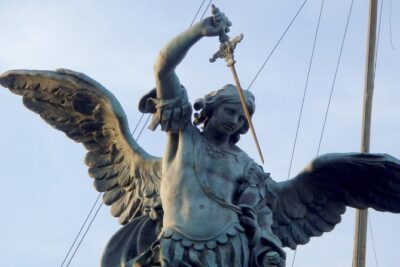
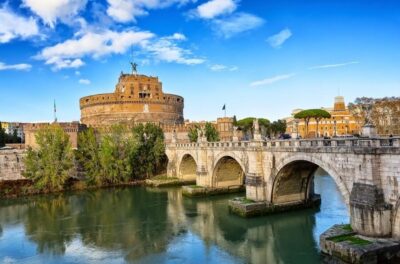
Castel Sant’ Angelo: The most famous Fortress of Rome
Read our review →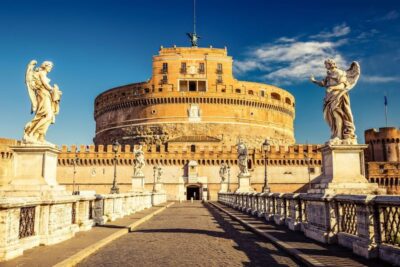
Rome E-Bike Tour: Roman Castles, Villages and Lake Views
Read our review →Browse the lists this tour appears in