
Review · JAPAN
Okinawa: Urasoe Castle, Royal Tomb & War History Walk
Urasoe’s story unfolds in a single walk: sacred royal tombs, a vanished Ryukyuan capital, and the scarred ridge known as Hacksaw Ridge. You move from calm stone paths to a sobering WWII site, then finish above the city with broad views toward the coast.
I like the way the tour connects royal history and wartime history instead of treating them as separate sights. I also like the local angle. When Koutaro leads, he adds Okinawan culture and even talks about the local dialect he is helping bring back.
The main drawback is the terrain. Stone-paved roads and uphill paths make this a poor choice if you have mobility limits or want an easy, flat sightseeing walk. The wartime sites can also feel heavy.
Key points to know before you book
- Urasoe Castle predates Shuri’s fame: Learn why the castle once served as a political and spiritual center of the Ryukyu Kingdom.
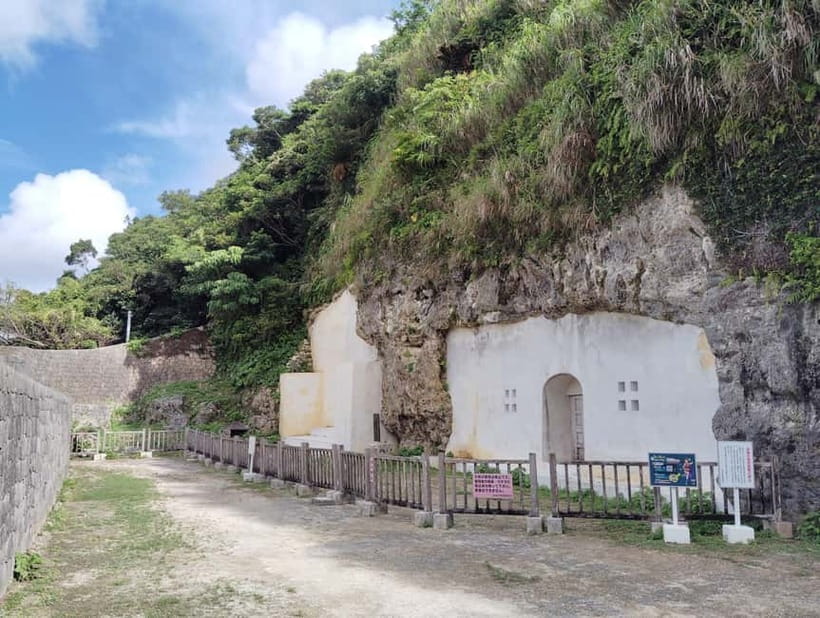
- Youdore is a quiet royal tomb: The cliffside mausoleum feels restrained and earthbound rather than grand or showy.
- Hacksaw Ridge is part of the walk: Tunnels, shelters, and wartime stories add a serious chapter to the route.
- The museum gives you useful context: Spend time with the exhibits before reaching the castle and tomb.
- A local guide shapes the experience: Koutaro has been praised for his easy manner, Okinawan background, and knowledge of local language.
- The private format allows a calmer pace: The walk lasts about 90 minutes to two hours, with no need to keep up with a large group.
Why this Urasoe walk is different from a standard castle visit
Many Okinawa sightseeing stops give you one subject at a time. You visit a castle, or a museum, or a war memorial. This walk links all three, showing how one small area carries layers of Okinawan identity.
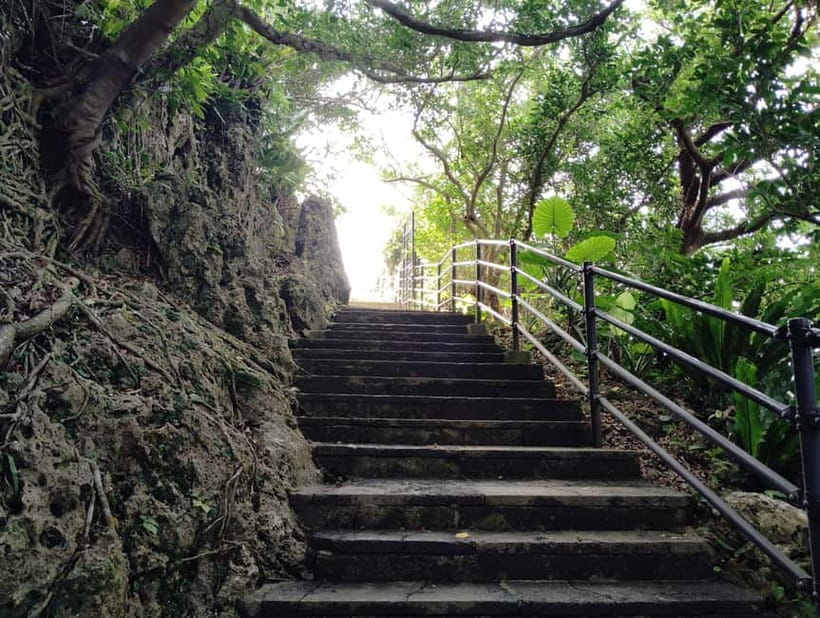
You begin near Urasoe-Maeda Monorail Station, with an option for transport from Naha’s Kokusai Street area. From there, the guide leads you along the Futenma pilgrimage path. The route is not simply a way to get from one attraction to another. Its stone paving and old alignment help you picture how people once moved through this area for religious purposes.
That setting matters. Okinawa’s past is not confined to polished halls or reconstructed buildings. Here, the road, hillside, tomb, castle ruins, and wartime shelters sit close together. The result feels more like reading a place than checking off monuments.
The walk is private, which is useful when the subject turns personal or difficult. You can ask about Ryukyuan kings, royal burial customs, the Battle of Okinawa, or the local dialect without waiting for a large group to move along. The guide can also explain why one site matters before you reach the next.
More Castle Walking Tours in Japan
- Tokyo Castle & Imperial PalaceーShogun Walking Tour
★ 4.7 · 1,068 reviews - Ultimate Osaka Walking Tour: Castle, Dotonbori & Hidden Gems
★ 5.0 · 862 reviews - Tokyo Castle & Imperial PalaceーShogun Walking Tour
★ 5.0 · 724 reviews
Start on the Futenma pilgrimage path
The opening stretch sets the tone. Your guide meets you at one of the designated starting points, either Kencho-mae Station in Naha or Urasoe-Maeda Station, depending on the option you choose. If you select the Naha transport option, your route begins more conveniently near Kokusai Street.
Once you start walking, expect stone-paved roads and ascending sections. Comfortable shoes are essential, and water belongs in your day bag. This is a short tour by clock time, but the uneven footing and climbs can make it feel more active than a museum visit.
The Futenma pilgrimage path gives you a sense of movement through older Okinawa. It is a practical setting for hearing about religious traditions and the ties between royal authority and sacred places. I like this beginning because it slows you down before the bigger historical stops.
The guide is an important part of this first section. Koutaro, one of the guides associated with the experience, has been praised for making the walk relaxed rather than rushed. He also discusses Okinawan language and the local dialect he is helping preserve. That detail adds something you will not get from a signboard alone.
Language is worth keeping in mind. The tour is conducted in English, but one piece of feedback noted occasional translation trouble. If a point is unclear, ask the guide to repeat it or use your phone to clarify a term. The experience is strongest when you take an active role in the conversation.
Use the museum to understand Urasoe’s royal past
The Urasoe Gusuku and Youdore Museum is scheduled for about 30 minutes. That time is valuable because the ruins themselves do not tell the whole story. The museum introduces the castle site, the royal tomb complex, and the people connected with them.
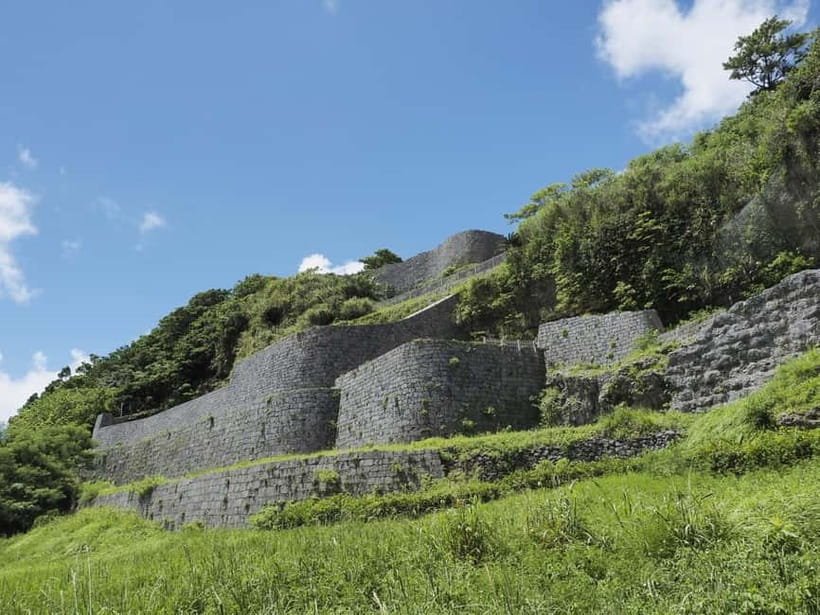
Urasoe Castle, or Urasoe Gusuku, was once a major center of Ryukyuan power before Shuri became the better-known capital. Your guide explains its political and spiritual role, helping you understand why the hill mattered long before modern Okinawa took shape around it.
The museum also gives attention to King Shō Nei, the last monarch based at Urasoe. His story is especially useful for understanding Okinawa’s position between larger outside powers. He sought diplomacy during a period of foreign pressure, and his later memory became linked with resilience and humility.
You do not need a long lecture to appreciate this section. A few clear explanations can change how you see the ruins above. Instead of viewing broken walls as an isolated archaeological site, you begin to picture a center of government, belief, and royal life.
The museum visit also helps with pacing. It gives you a chance to pause indoors before the uphill sections. Because the entire walk is compact, you should not expect a large museum program or an extended independent visit. The point is orientation, not a full afternoon of exhibits.
Enter Youdore through the Kurashin Gate
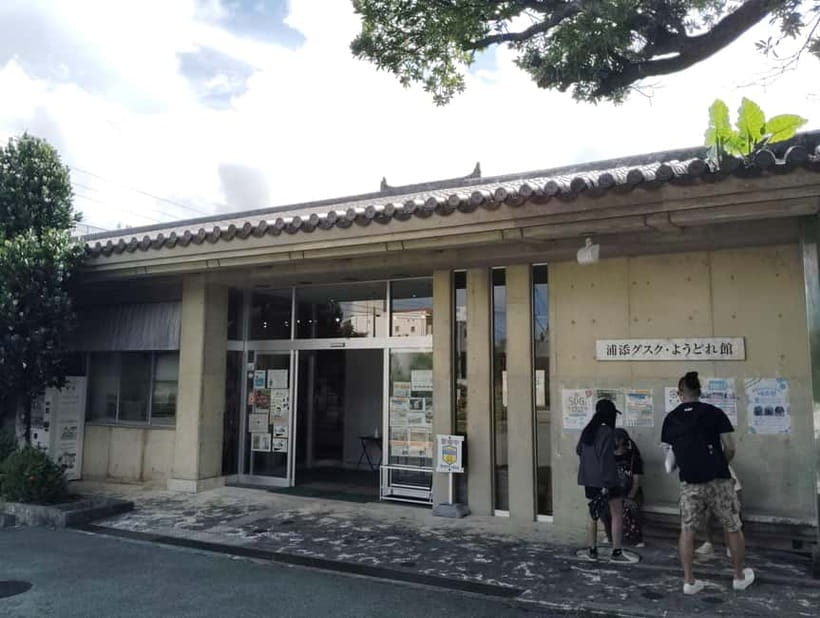
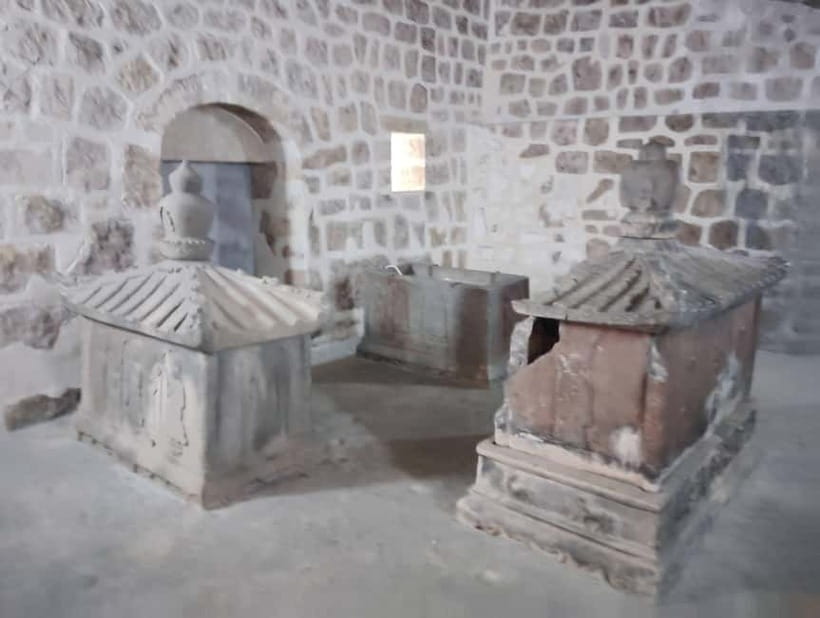
After the museum, you continue through the Kurashin Gate toward Youdore. The royal mausoleum occupies a serene cliffside setting, and its mood differs sharply from the grand imperial tombs you may have seen elsewhere in Asia.
Youdore is associated with the early kings of the Ryukyu Kingdom. Its design and setting reflect a quieter idea of royal remembrance. Rather than overwhelming you with scale, it brings the tombs into close contact with the rock and earth around them.
That restraint is one of the most memorable parts of the tour. The site feels solemn without being theatrical. Your guide can help you understand why the tomb matters and how Okinawan ideas about reverence differ from the grand display often associated with imperial burial sites.
You should behave respectfully here. Keep your voice low, follow the guide’s directions, and avoid treating the mausoleum as a quick photo stop. A camera is welcome, but the atmosphere calls for attention before snapshots.
The path and approach also deserve care. This is not a fully accessible attraction, and the route includes stone surfaces and climbs. If you have trouble with uneven ground or stairs, the experience may be uncomfortable. The tour specifically is not suitable for people with mobility impairments.
Same walls, a different way in:
- Osaka Castle: Museum and Tower Entry Ticket
★ 4.5 · 2,380 reviews - Kyoto: Nijo-jo Castle and Ninomaru Palace Guided Tour
★ 4.7 · 1,020 reviews - Kyoto: Nijo Castle, Kiyomizu & Fushimi Inari Guided Tour
★ 4.7 · 700 reviews - Osaka Castle Walking Tour and Castle Tower Admission
★ 5.0 · 561 reviews
Walk toward Urasoe Castle and the seiden
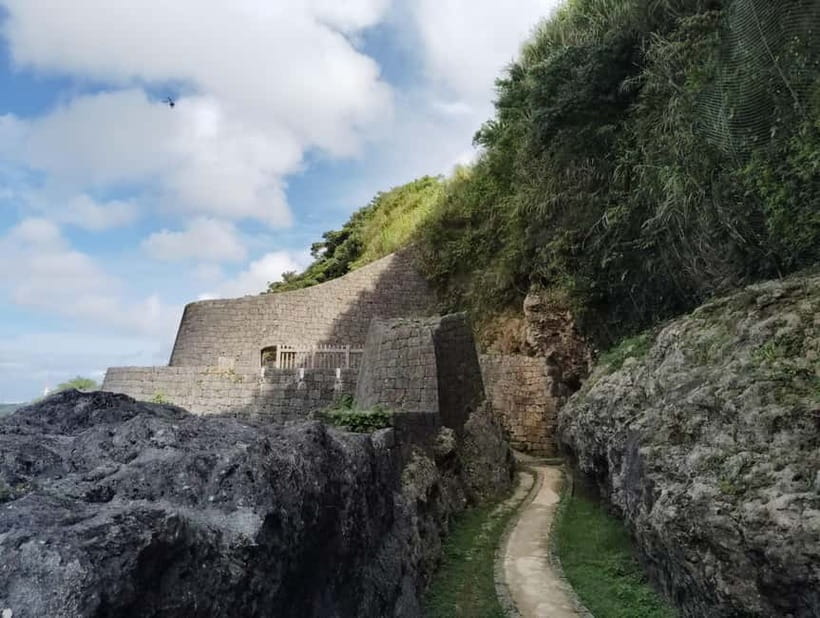
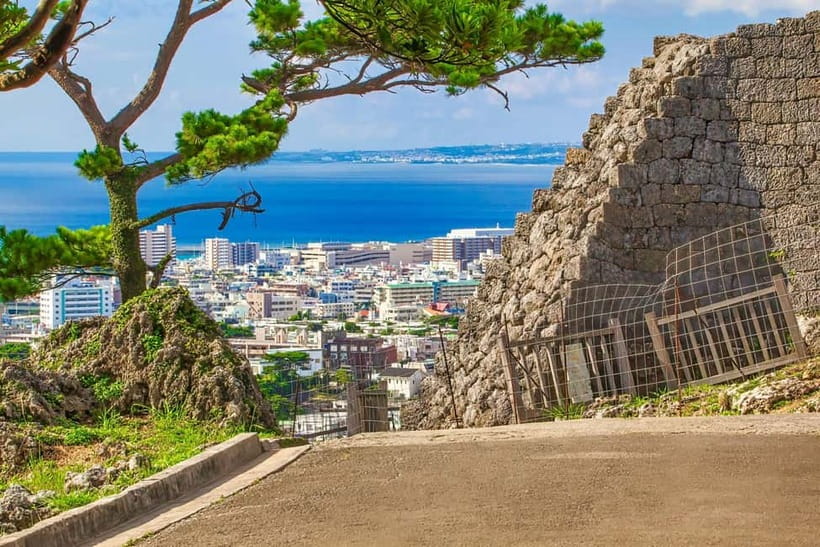
From Youdore, the route climbs toward the Urasoe Castle ruins. This section brings together archaeology and scenery. As you rise, the city and coast open out below, while the guide explains how the castle was arranged and why its main hall, or seiden, carried symbolic weight.
Do not expect a complete castle building. You are visiting ruins and learning to read the remains. The guide’s interpretation matters here, especially when explaining the former position and purpose of the seiden. The main hall was more than a functional room. It represented the authority of the ruler and the center of the kingdom’s political and spiritual life.
The castle’s earlier role is central to the walk. Shuri often receives most of the attention from first-time visitors to Okinawa, but Urasoe helps show that Ryukyuan power developed across more than one famous site. Seeing Urasoe before or alongside Shuri can give your Okinawa itinerary better balance.
At the top, take time with the view. You can look over the city and toward the coast, making it easier to grasp why this high point had practical and symbolic value. It is also a natural pause after the climb.
The scenery is peaceful, but the subject is not always light. The same heights later became part of the Battle of Okinawa. That shift from royal authority to modern warfare is one of the tour’s strongest ideas.
Face the history of Hacksaw Ridge
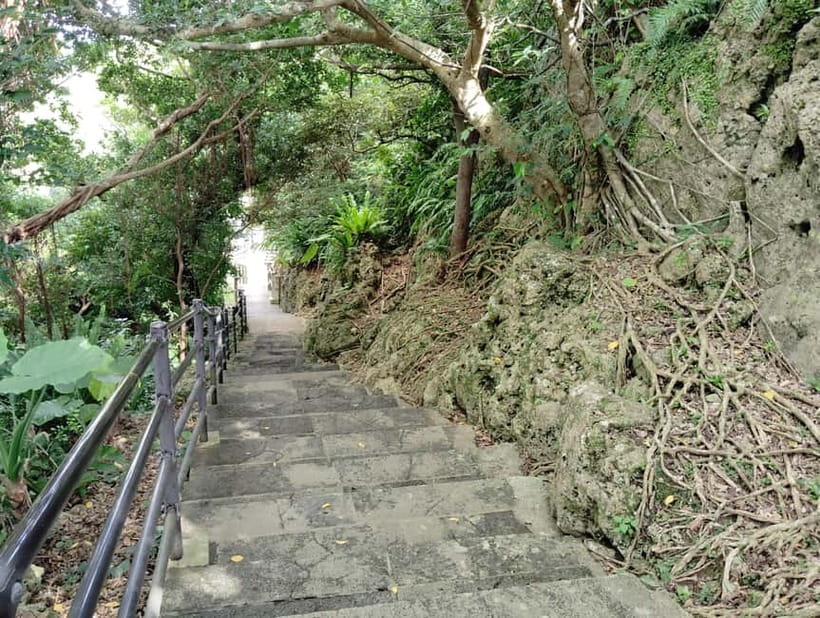
The Maeda Escarpment, or Maeda Kōchi, is widely known as Hacksaw Ridge because of the fierce fighting there during World War II. The tour brings you past a place that can look quiet and green today but carries the marks of intense battle.
You may see or hear about tunnels, shelters, and other wartime traces. These features give physical shape to the stories of sacrifice. The guide also explains Okinawa’s painful distinction as the only civilian battlefield in Japan during WWII.
This is not a light entertainment stop. The subject includes civilian suffering, military violence, and the destruction that reached across Okinawan communities. You should expect the mood to become more serious, especially if you have already visited other war-related sites in Okinawa.
I appreciate that the route does not isolate the battlefield from the rest of the island’s past. The ridge follows a royal tomb and castle ruins, showing how the same ground has carried different forms of authority, faith, and conflict. The walk asks you to consider continuity, but not in a sentimental way.
If you prefer sightseeing without difficult historical material, this may not be the right tour. If you want to understand Okinawa beyond beaches and resort areas, the battlefield section adds essential context.
How the timing and private format work
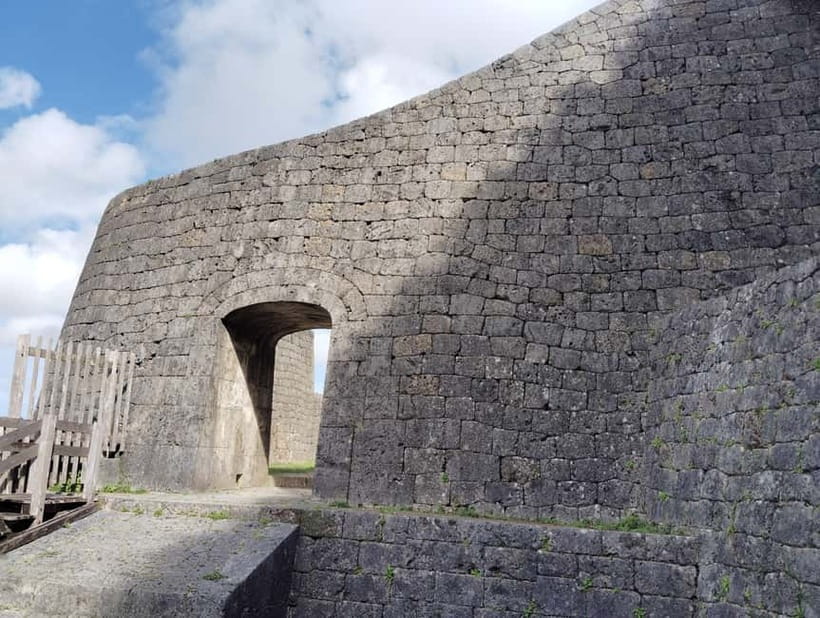
The stated duration is 90 minutes to two hours. The exact length can depend on the starting option, walking pace, and how much time you spend asking questions. Three main portions are planned at about 30 minutes each: the museum, the Youdore and castle area, and the guided sightseeing sections around the historic route.
That compact schedule works well for a morning or afternoon addition to a Naha stay. You can finish at Urasoe-Maeda Station, making it practical to continue by monorail afterward. Still, do not treat it as a completely effortless stop between meals. Stone paths and uphill walking require proper shoes and a little energy.
The private-group format is another advantage. You can ask for more explanation about King Shō Nei, the royal tomb, the local dialect, or the battle sites. A patient guide can also adjust the pace within reason, although the route itself remains physically demanding.
Meals are not included, but this is not a problem for most people because the tour is short. Bring water, and plan food before or after rather than expecting a meal during the walk. A camera is useful for the views and ruins, but the best value comes from the explanations.
Is the $65 price fair?
At $65 per person, the tour is not the cheapest way to see Urasoe if you only want to look at ruins from the outside. The price includes a guided walking tour, admission to the Urasoe Gusuku and Youdore Museum, a local English-speaking guide, and transportation from the Kokusai Street area if you select that option.
The value rests mainly in interpretation. You are paying for the connection between the pilgrimage path, royal tomb, castle, King Shō Nei, and Hacksaw Ridge. Without a guide, those places could feel like separate stops with limited explanation.
The private format improves the calculation for couples, families, or small groups who want direct access to a guide. It is less compelling if you are happy to read signs, walk independently, and spend only a few minutes at each site.
The strongest praise has focused on the guide’s local background, relaxed pace, humor, and ability to explain Okinawan culture. One guide, Koutaro, is noted for discussing the local dialect as well as history. That personal connection is the part most likely to make the price feel worthwhile.
Free cancellation up to 24 hours before the start and reserve-now, pay-later booking also reduce the risk if your Okinawa schedule is still shifting. These are useful conveniences, but they should not replace checking the starting time and meeting point for your chosen option.
Who should book this walk?
I would recommend it to you if you want historical depth in a short outing and prefer walking through real places to sitting in a large museum. It suits first-time visitors who want a clearer introduction to the Ryukyu Kingdom, as well as returning visitors who have already seen Shuri and want a less familiar royal site.
It is also a good fit if WWII history is an important part of your Okinawa plans. The tour does not replace a full visit to other war museums or memorial sites, but Hacksaw Ridge gives the subject a physical setting.
You should think twice if you need step-free access, dislike uneven paths, or want a gentle city stroll. The guide can make the walk feel unhurried, but no guide can remove the hills and stone surfaces.
Book it if you value a local voice, thoughtful context, and a route that joins Okinawa’s royal and wartime past. Skip it if your priority is an easy attraction with little walking. For the right visitor, this is a compact and serious way to see a side of Okinawa that a bus tour is likely to miss.
FAQ
Where does the tour start?
The tour has two possible starting locations: Kencho-mae Station or Urasoe-Maeda Station. The meeting point depends on the option you book.
Where does the tour finish?
The walk finishes at Urasoe-Maeda Station.
How long does the experience last?
The tour lasts about 90 minutes to two hours. Starting times should be checked when you select your date.
Is the tour conducted in English?
Yes. The live guide language is English.
Is this a private tour?
Yes. The experience is offered for a private group.
What sites are included?
The route includes the Futenma pilgrimage path, Urasoe Gusuku and Youdore Museum, the Youdore royal mausoleum, Urasoe Castle ruins, and the Maeda Escarpment, also known as Hacksaw Ridge.
Is transportation included?
Transportation from the Kokusai Street area in Naha is included with the option that offers it. The meeting point varies by booking option.
What should I bring?
Bring comfortable shoes, water, and a camera. The route includes stone-paved roads and uphill sections.
Is the tour suitable for people with mobility impairments?
No. The tour is not suitable for people with mobility impairments because it includes uneven stone paths and ascending sections.
More History Inside the Walls in Japan
- Osaka: Castle History Walking Tour / Castle Tower Admission
★ 4.9 · 230 reviews - 2.5 Hour Private History and Culture Tour in Himeji Castle
★ 5.0 · 185 reviews - Kyoto: Nijo Castle World Heritage Guided Tour with Admission
★ 5.0 · 128 reviews - Himeji: Himeji Castle Guided Tour – UNESCO Heritage
★ 4.7 · 115 reviews
Newly walked in Japan
- Tokyo: Edo Castle and Imperial Palace Guided Walking Tour★ 5.0 · 6 reviews
- (Ticket Included) Explore Osaka Castle & Museum of History★ 4.8 · 21 reviews
- Peace Memorial Park, Hiroshima Castle, & Garden Private Tour★ 4.8 · 7 reviews
- Osaka: Osaka Castle – Tsuruhashi – Tennoji (Spanish Guide)★ 4.7 · 10 reviews
- Osaka/kyoto: Himeji Castle, Kobe. Luxury Day Trip with Guide★ 5.0 · 2 reviews
- Osaka: Osaka Castle 3 hours Historical Walking Tour★ 4.6 · 14 reviews
- Osaka: Early Morning Osaka Castle Guided Tour, Avoid Crowds★ 4.9 · 12 reviews
- Osaka: Explore Every Bit of Osaka Castle in 3 Hours★ 5.0 · 5 reviews
Castle Walking Tours, compared.

Edinburgh Castle: Guided Walking Tour with Entry Ticket
Read our review →
3-Hour Walking Tour of Old Town & Prague Castle
Read our review →Edinburgh Castle: Guided Walking Tour with Entry Ticket
Read our review →

Prague 3-hour Afternoon Walking Tour including Prague Castle
Read our review →
Royal Mile and Edinburgh Castle – Small Group Walking Tour
Read our review →
Browse the lists this tour appears in