
Review · ITALY
San Leo: Fortress Entry Ticket and Cagliostro’s Prison
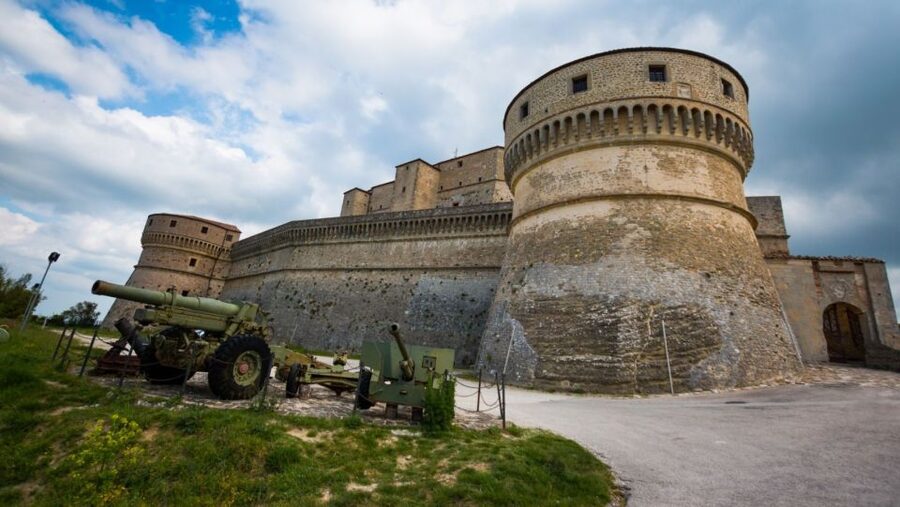
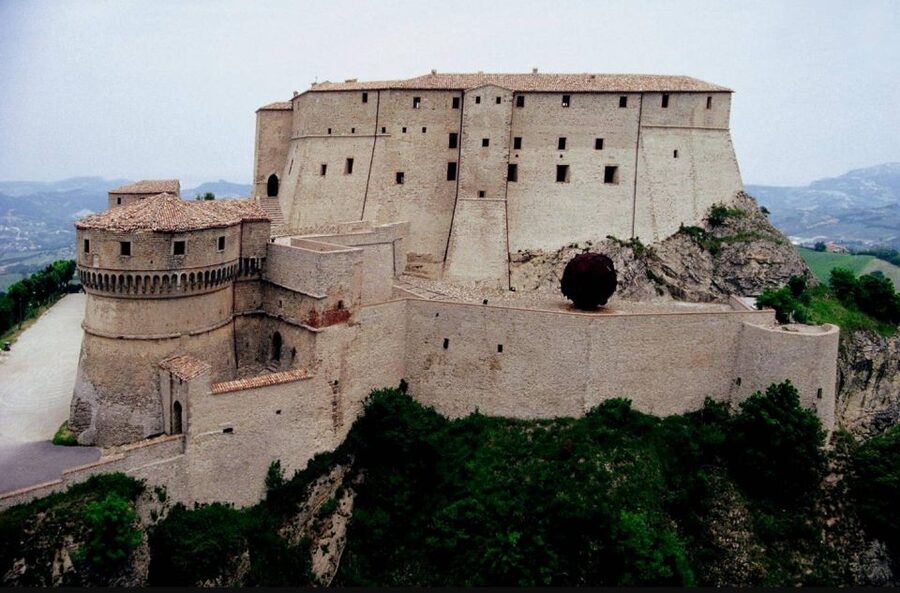
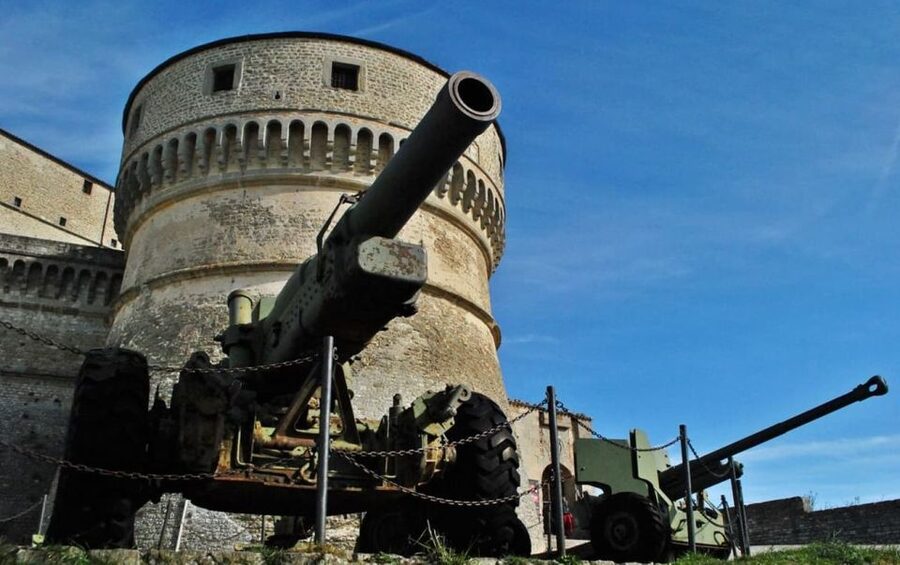
San Leo Fortress rises above a small Romagna village, its stone walls built for defense and now filled with weapons, prison rooms, frescoes, and military displays. The most memorable stop is Cagliostro’s cell, where the famous alchemist and magician spent his final years as a prisoner.
I like the low ticket price and the freedom to explore at your own pace. I also like the range of exhibits, from 1500s weapons to First and Second World War items, rather than a single narrow display. The main drawback is that many signs are in Italian, so readers who do not know the language may want to use a translation app or read about Cagliostro before arriving.
Key points to know before you go
- Cagliostro’s prison cell gives the fortress a dramatic human story, not just military history.
- Weapons from the 1500s through the 20th century show how defense changed over time.
- Torture instruments and fortifications make the visit more vivid, though some displays may not suit young children.
- Musleo, the virtual ecomuseum of San Leo, adds a modern layer to the old stone building.
- The $11 admission is valid for one day, giving you room to explore without rushing.
- Italian-only signs can limit the experience, especially if you want detailed explanations in English.
Why San Leo Fortress is worth your time
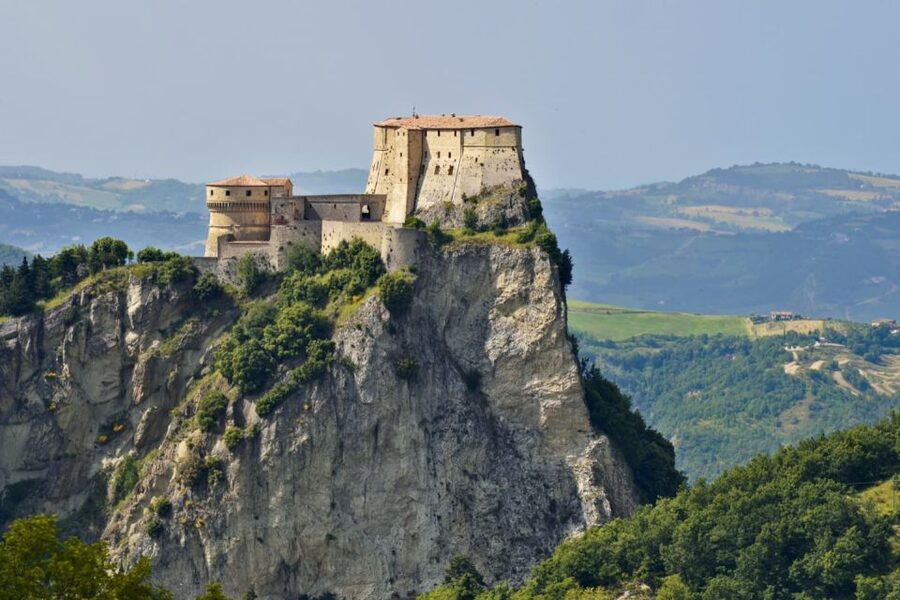
San Leo is the kind of place where the setting does much of the work. The fortress sits above a village of fewer than 3,000 people in the hinterland of Rimini, and its position explains why the site mattered for so long. From here, defense depended on steep ground, thick walls, and control of the surrounding area.
I like fortresses that let you see both the grand military plan and the smaller human details. San Leo offers both. You can examine towers and defensive structures, then step into a prison cell connected with one of Italy’s most colorful historical figures.
The ticket costs $11 per person. That is a fair price for access to the fortress rooms, weapons collections, torture exhibition, Cagliostro’s prison, the Musleo virtual ecomuseum, and the fortifications. Since the ticket is valid for one day, you are not tied to a short timed visit. You can spend a focused hour inside or take longer if you want to read the displays and inspect the building carefully.
This is not a guided tour with a named guide or a fixed group itinerary. You make your own route through the fortress. That gives you flexibility, but it also means the quality of your visit depends partly on how much background you bring with you.
More Castle Entry Tickets in Italy
- Milan: Sforza Castle Entry Ticket with Digital Audio Guide
★ 4.0 · 2,675 reviews - Trieste: Miramare Castle & Museum Entry Ticket & Audio App
★ 4.2 · 213 reviews - Miramare Castle Entrance Ticket in Trieste
★ 3.5 · 37 reviews
Entering a fortress built for defense
The first impression comes from the architecture. San Leo Fortress is presented as one of Italy’s oldest and one of Europe’s largest fortresses, and its design reflects centuries of military use. The fortress has returned to its architectural splendor, with towers, walls, and fortified spaces that show why attackers would have found it difficult to take.
You will not simply walk into a modern museum arranged in one neat gallery. The building itself is part of the experience. Doorways, defensive areas, towers, and thick stone rooms help you picture the fortress as a working stronghold rather than a decorative monument.
I recommend starting slowly. Look at the structure before moving straight to the objects in the cases. The shape of the rooms, the heavy construction, and the position of the fortifications provide useful context for the weapons and prison displays.
The setting also makes San Leo different from a standard town museum. You are visiting a fortress in the center of a historic village, not a collection placed in an ordinary exhibition hall. If you are already exploring the Rimini area, this is a worthwhile change of pace from the coast.
Weapons from the 1500s to the World Wars
The weapons collection is one of the clearest reasons to visit. It begins with arms dating from the 1500s and continues into displays connected with the First and Second World War. That time span gives you a simple way to follow changes in military equipment.
The older pieces fit naturally inside the fortress. They help explain the building’s original purpose and the kind of conflict it was designed to survive. Later weapons show how warfare changed as technology advanced. The collection is not limited to one period, so you can compare early arms with modern military objects in the same visit.
I find this broad range more useful than a display focused on only one century. It lets you see San Leo as a place with a long military life, not a monument frozen in its medieval or Renaissance past.
Do not expect every object to come with extensive English explanation. Some signs are in Italian, which can make the collection harder to follow in detail. You can still understand the general progression from older weapons to modern examples, but a translation tool will help if you want to identify individual pieces or read longer descriptions.
Cagliostro’s cell and the prison story
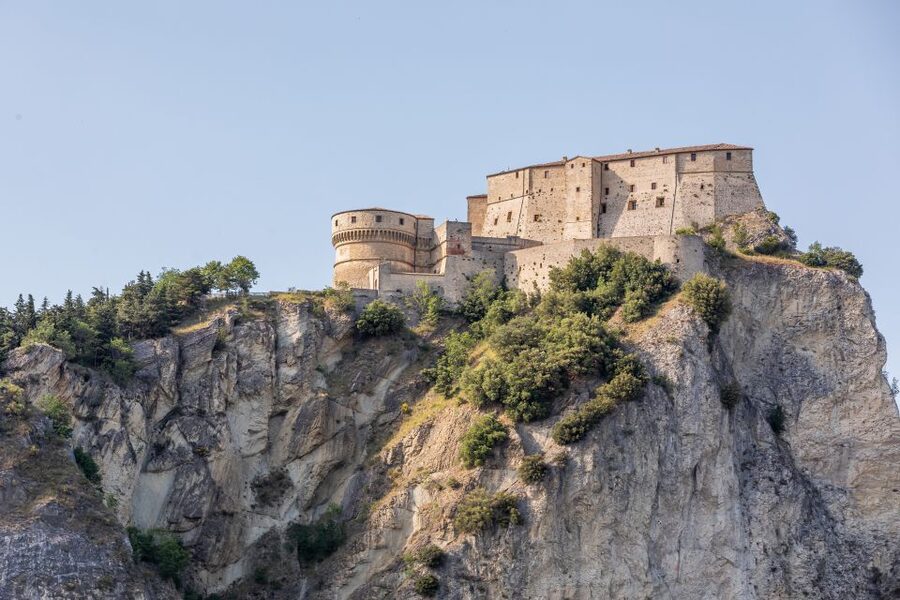
The most distinctive part of the visit is the prison associated with Count Cagliostro. Known as an alchemist and magician, Cagliostro was confined at San Leo, and his cell is now one of the fortress’s main attractions.
This room changes the tone of the visit. Weapons and walls tell you about armies and defense. Cagliostro’s cell brings the story down to one person, his reputation, and the harsh reality of confinement inside a fortress.
I like this stop because it gives the building a personal focus. You are no longer looking only at a military structure. You are standing in the place connected with a prisoner whose name still adds mystery to San Leo.
The display is best approached with realistic expectations. The ticket includes the cell, but it does not include a personal historian or a guided storytelling session. If you know a little about Cagliostro before you arrive, the room will mean more. If you arrive without background, the cell still works as a memorable part of the fortress, but the story may feel less complete because of the Italian signage.
More Fortress and Citadel Tours in Italy
- Fortress: Prisons, Museum of Fortifications and Alps Museum
★ 4.5 · 125 reviews - Bard: Fortress Exhibitions and Museums Entrance
★ 4.3 · 29 reviews - Castel Sant’ Angelo: The most famous Fortress of Rome
★ 4.0 · 13 reviews
Torture instruments and difficult displays

The fortress also contains an exhibition of torture instruments. This is a darker section, and it will not appeal to everyone. It is useful for understanding how imprisonment and punishment functioned in fortress settings, but the subject matter can be unsettling.
I would not rush children through this area or assume every member of your group will want to study it closely. The exhibit is part of the historical presentation, not a light entertainment stop. If you prefer architecture, weapons, or art, you can give this room less time and focus on other parts of the fortress.
For adults interested in the less polished side of military history, the collection adds weight to the visit. It shows that fortresses were not only places for soldiers and rulers. They were also places of confinement, punishment, and fear.
Because the signs may be in Italian, you might not receive detailed context for every instrument. Even so, the objects make their subject clear. Take your time, but do not feel obliged to study every display.
Frescoes, artefacts, and changing exhibitions
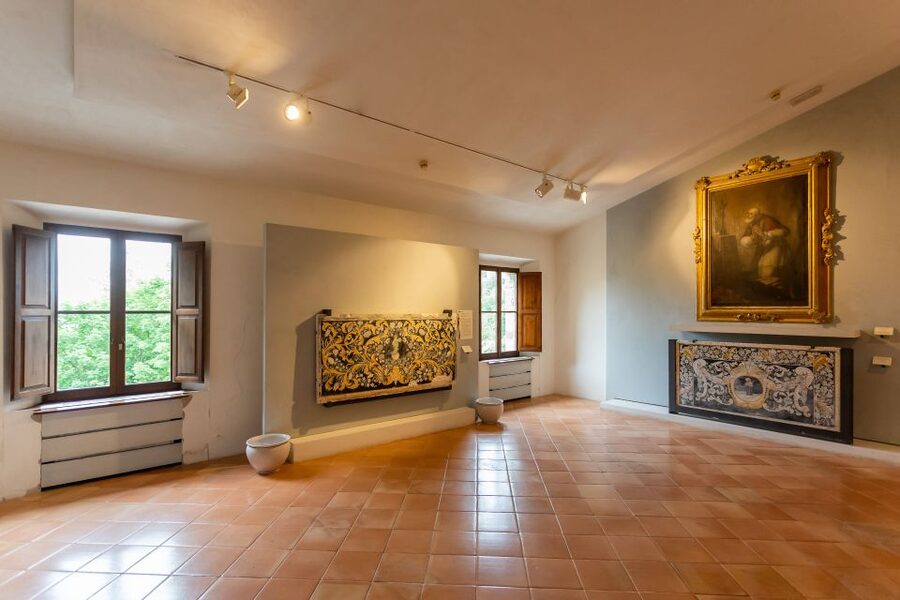
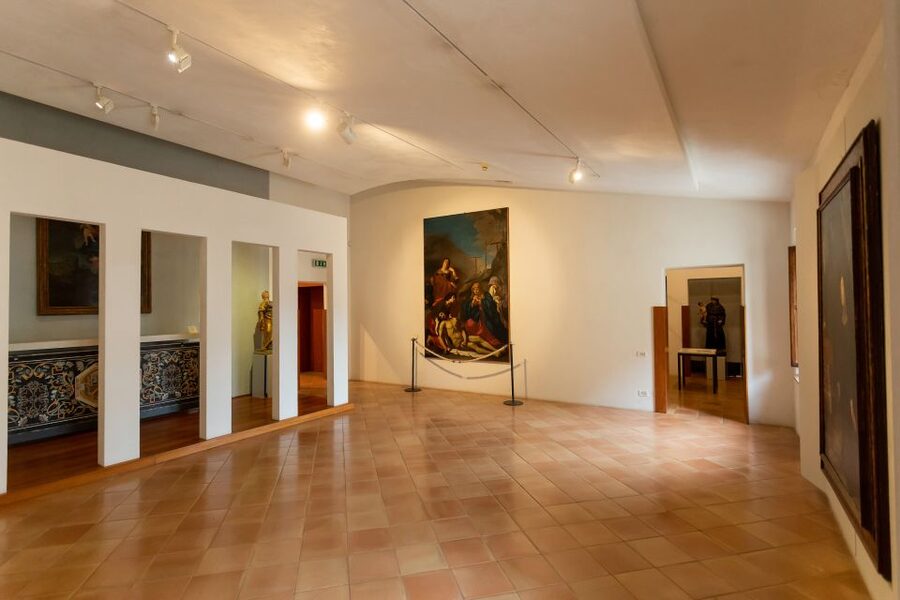
San Leo’s rooms contain more than weapons and prison material. You can also find historical artefacts, frescoes, and displays connected with different periods of the fortress’s past.
One notable feature is a replica of Vasari’s fresco representing the Medici family’s taking of San Leo. This links the fortress to a major episode of political and military change. It also adds an artistic element to a visit that might otherwise focus mainly on armor, weapons, and stonework.
The fortress has also hosted exhibitions of contemporary works. These displays can change, so the exact experience may depend on when you visit. That variety is useful because it keeps the building from feeling like a single-period museum.
I like the contrast between old rooms and newer works. A contemporary display inside a military fortress can make you look again at the space around it. At the same time, visitors who want only original historical objects may find changing art exhibitions less essential.
The best approach is to treat these rooms as part of the wider character of San Leo. Some stops will be central to your interests, while others will work as brief additions.
Musleo and the modern side of San Leo
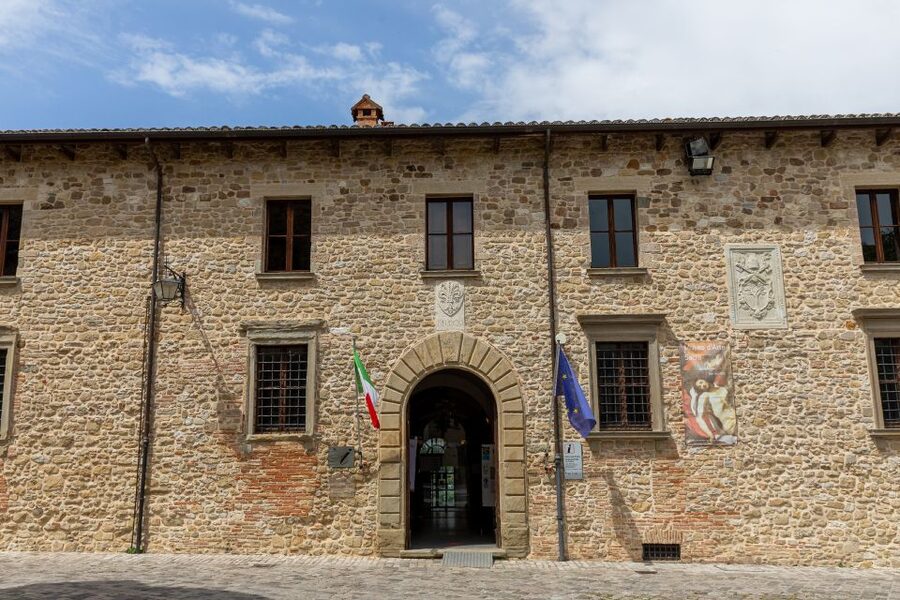
The Musleo virtual ecomuseum offers a more modern way to understand San Leo. Its role is to present the history and identity of the area through a digital format, adding context beyond the physical objects in the fortress.
This is particularly helpful because the fortress covers many subjects. You move from ancient origins and military defense to prison history, weapons, torture, art, and modern exhibitions. A virtual ecomuseum can help connect those separate parts.
I would give Musleo extra attention if you want more than a quick look around. It may be the place where the broader story of San Leo makes the most sense, especially if you have limited Italian and need another way to organize what you are seeing.
The information provided does not specify the exact technology or language options available inside Musleo. Do not assume that every element will be in English. Still, its inclusion makes the ticket more than a simple entry pass to rooms and walls.
How long to allow and when to visit
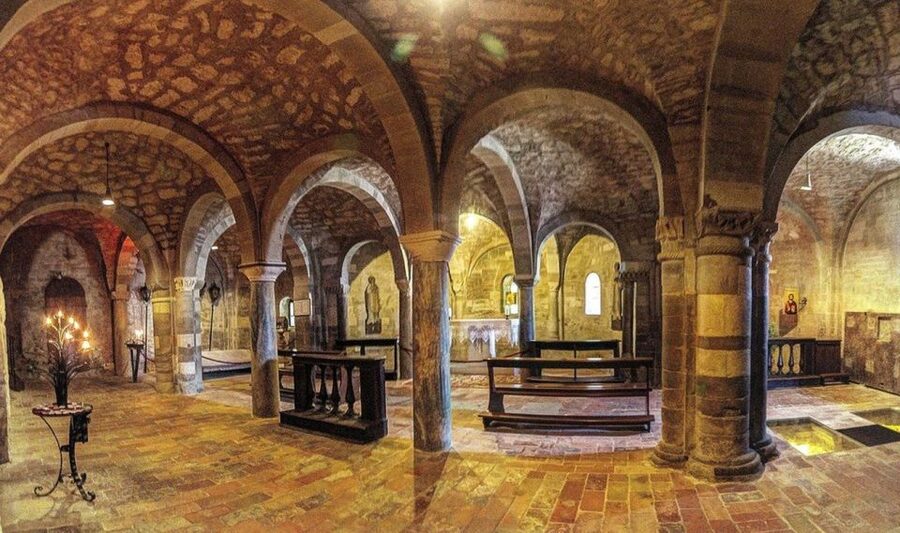
The ticket is valid for one day, rather than for a short fixed slot. That makes it easy to fit the fortress into a wider visit to San Leo. You can arrive during opening hours, explore the rooms, take a break in the village, and return if the daily admission rules allow it.
Opening times change through the year, so check availability for your date. From March 31 through June 29, the fortress opens from 10:30 a.m. to 6 p.m. Monday through Friday, and from 10 a.m. to 7 p.m. on Saturdays, Sundays, and public holidays.
The autumn and winter schedules are shorter. In October, weekday hours run from 10:30 a.m. to 5:45 p.m., with last entry at 5 p.m. Weekend and holiday hours run from 10:30 a.m. to 6:45 p.m., with last entry at 6 p.m.
In November and December, the fortress closes earlier, generally at 5 p.m. on weekdays and 5:45 p.m. on weekends and holidays. Tuesdays are closed during the listed November schedule, and specific Tuesdays are closed in December. On Wednesday, December 25, the stated hours are 2 p.m. to 5 p.m.
In January, weekday hours are 10:30 a.m. to 5 p.m., with last entry at 4:15 p.m. Weekend and holiday hours are 10 a.m. to 5:45 p.m., with last entry at 5 p.m.
The supplied schedule does not list every month, so check the current date-specific hours before setting out. The last-entry time matters. A late arrival may leave too little time for the prison, weapons rooms, and fortifications.
Who will get the most from this visit
I would recommend San Leo Fortress to anyone interested in military architecture, Italian history, prisons, or unusual local museums. It also suits visitors who prefer to explore without a guide or a strict timetable.
Families can find plenty to look at, especially in the weapons rooms and towers, but the torture display may not be suitable for every child. Adults interested in Cagliostro will have a clear reason to visit, while art lovers can look for the Vasari fresco replica and any contemporary exhibitions on display.
The experience may be less satisfying if you need detailed English interpretation at every stop. Italian-only signs are a real consideration. You can still see the fortress and understand its main themes, but you may miss finer points without translation help.
The booking information also marks the activity as unsuitable for people over 95 years old. The supplied details do not explain the exact reason, so anyone with mobility or endurance concerns should check directly before booking.
Booking flexibility and practical value
The activity allows cancellation up to 24 hours in advance for a full refund. You can also reserve now and pay later, which helps if your route through Emilia-Romagna is still changing.
There is no stated guide, transportation service, or group size included. This is best understood as a self-guided admission ticket. You arrange your own way to San Leo and then explore the fortress at your own speed.
A bookshop is available at the fortress. That is useful if you want a souvenir connected with the site or need more background after encountering Italian displays. The exact stock and language selection are not specified, so do not count on finding a particular title.
At $11, the admission offers good value for a substantial historic site with several types of exhibits. The value is strongest if you take time to see the whole complex rather than entering only for a quick photograph.
Should you book San Leo Fortress?
Book this ticket if you want a flexible visit to a serious old fortress with a memorable prison story, broad weapons displays, towers, fortifications, and a digital museum. The low price makes it an easy addition to a day in the San Leo area.
Think twice if you require a fully guided English experience or if torture exhibits are not suitable for your group. For most history-minded visitors, though, the combination of architecture and Cagliostro’s cell gives San Leo more character than a standard museum stop. Check the seasonal hours, arrive before last entry, and allow enough time to look beyond the famous prison room.
FAQ
What does the San Leo Fortress ticket include?
The ticket includes entry to San Leo Fortress, Cagliostro’s famous prison cell, the Musleo virtual ecomuseum, the fortress rooms, weapons displays, the torture instruments exhibition, towers, and fortifications.
How much does admission cost?
The stated price is $11 per person.
How long is the ticket valid?
The ticket is valid for one day.
Is Cagliostro’s prison cell included?
Yes. The ticket includes a visit to the cell associated with Count Cagliostro, described as an alchemist and magician.
Are the signs available in English?
The provided information indicates that signs may be in Italian. If you do not read Italian, a translation app may help.
What weapons can I see?
The fortress has weapons dating from the 1500s, along with displays connected with the First and Second World War.
Is there a torture instruments exhibition?
Yes. The fortress includes an exhibition of torture instruments.
What are the opening hours?
Opening times vary by season. The stated schedules include different hours from March 31 through June 29, in October, November, December, and January. Check availability for the date of your visit.
Can I cancel the booking?
Yes. You can cancel up to 24 hours in advance for a full refund. You can also reserve now and pay later.
Newly walked in Italy
- Postojna Cave & Predjama Castle from Trieste★ 4.5 · 122 reviews
- City walk through Spanish steps, Trevi fountain, Pantheon, Navona, Angel Castle★ 5.0 · 55 reviews
- Milan Private Tour – Duomo, Sforza Castle & Gelato Tasting★ 5.0 · 40 reviews
- Milan: Duomo, Scala, Sforza Castle and Last Supper Private Tour★ 5.0 · 38 reviews
- Private Tour – St. Angel’s Castle★ 5.0 · 42 reviews
- Milan: Private Tour – Duomo, Sforza Castle & Gelato Tasting★ 4.8 · 36 reviews
- Palermo: Medieval castles of Caccamo & Cefalù. Small Group Tour★ 5.0 · 24 reviews
- Private daytour medieval castles from Civitavecchia port★ 4.5 · 7 reviews
Fortress & Citadel Tours, compared.



From Cairo Alexandria Catacombs, Citadel Day Trip with Lunch
Read our review →
Charleston historical walking tour with a Professor of History at The Citadel
Read our review →
Hue Customizable Tour with Imperial Citadel & Forbidden City
Read our review →
Desert Safari: Luxury Fortress Dinner, Camel Ride & Dune Bashing
Read our review →
Egyptian Museum, Citadel, and Old Cairo Guided Tour
Read our review →Browse the lists this tour appears in